

Key Takeaways
| Two different events | A split you walk down an aisle in and a split you dance in are not the same split. |
| The aisle is the test | You walk slowly, in a straight line, watched from the front. The split is open the whole way. |
| Side split is safer | It shows far less head on, and gives the same stride as a front split. |
| Fabric decides the drape | Satin holds the split closed between steps. Tulle and chiffon float it open. |
| Order timing | Wedding dresses take 10 to 20 business days to make. Plan on 5 to 8 weeks in total. |
A front split on a wedding dress is a reception detail that has to survive a ceremony. That is the whole problem, and almost nobody thinks about it in that order.
Walking down an aisle is the most exposed thirty seconds of the day: slow pace, straight line, everyone watching from the front. A split that looks composed on a dance floor can be doing something else entirely in that walk.
What a Split Does to a Wedding Dress
Bridal design has always tracked contemporary fashion rather than standing still, and the split is the current example.
It is a modern addition to a traditional garment
As Wikipedia's entry on the wedding dress notes, bridal design has always followed the fashion of its period rather than staying fixed. A split reads as deliberately contemporary, which is exactly why some venues suit it and others do not.
It changes the silhouette, not just the coverage
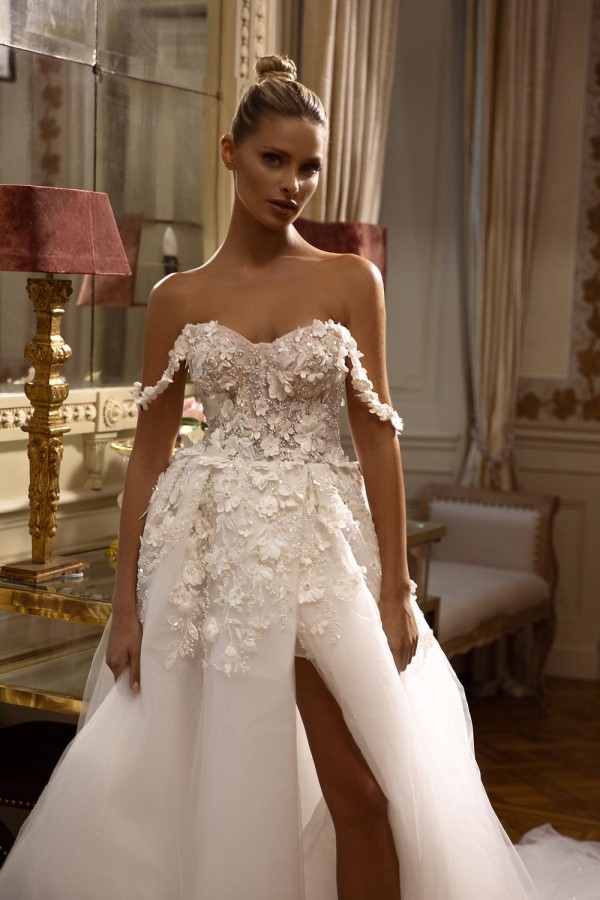
A split breaks the unbroken column of a floor-length skirt, which makes the dress read lighter and less formal. On a ball gown it reads as a statement; on a fitted sheath it reads almost like a design line.
It solves a real practical problem
Bridal skirts are long, heavy and worn for twelve hours. A split at knee height restores a normal stride, which matters on stairs, in cars and on grass.
It also keeps the hem off the ground as you walk, which matters more than most brides expect. A floor-length skirt collects everything the venue floor has on it, and a split lets you lift the front without gathering the whole skirt in one hand.
The Ceremony Problem
Three things about a ceremony make a split behave differently than it does anywhere else that day.
What the aisle does to a split:
- You walk slowly, so the split stays open longer between steps
- You are viewed head on, the angle a front split shows most
- Photographers shoot from the front of the aisle, at that exact angle
- You may be standing still, facing the room, for twenty minutes
Standing still is the harder test
Walking closes and opens a split rhythmically. Standing at the altar holds it in one position for a long time, and if the split falls open at rest, that is the version everyone sees for most of the ceremony.
Religious and traditional venues
Some churches and other places of worship publish dress expectations for the couple, and a high split is the kind of detail that gets mentioned. Ask early rather than after the dress is made, because a split cannot be added or closed cheaply.
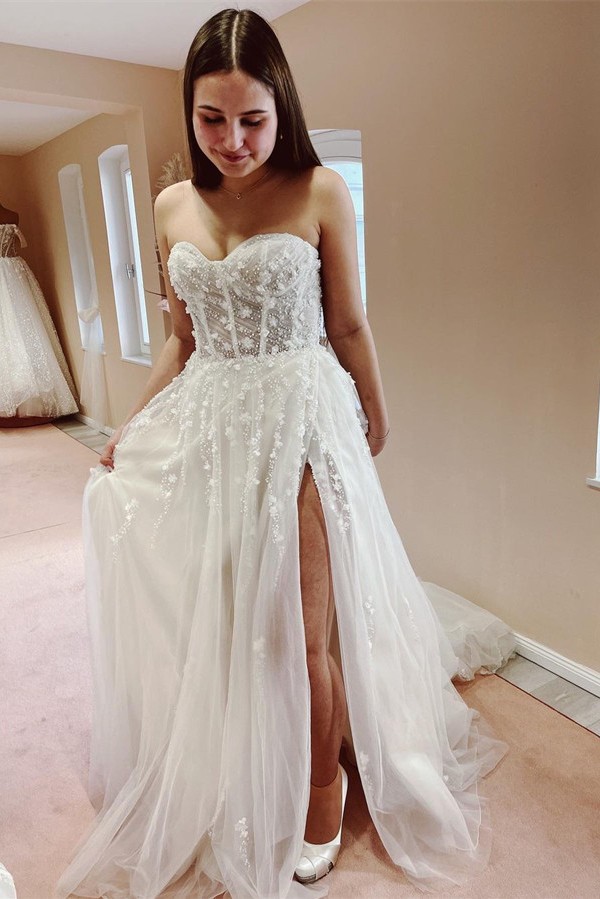
The side split solves most of it
A side split opens over the outer thigh instead of the centre of the leg. Head on, from the aisle, it barely shows. You still get the full stride, which is the practical benefit you wanted.
Ask to see it from the front, seated
Most bridal photographs are taken standing. Before the day, sit in the dress on a normal chair and have someone photograph you from directly in front, at eye level, the way a guest at the end of a row will see you.
A front split falls open across the thigh when you sit, at an angle you cannot control from inside the dress. Five minutes of checking now saves you adjusting it all through a seated ceremony or a long dinner.
The Reception Case
At the reception the same split stops being a risk and starts being the reason you chose the dress.
You will be moving all evening
Dancing, sitting at a long table, moving between groups, getting in and out of cars. This is where a bridal skirt is at its most restrictive and where a knee-height split earns its place.
The photographs change angle
Reception photography is candid and shot from every direction. A split that only reads strongly head on is barely noticeable in that mix, which is why side splits photograph so easily at this stage.
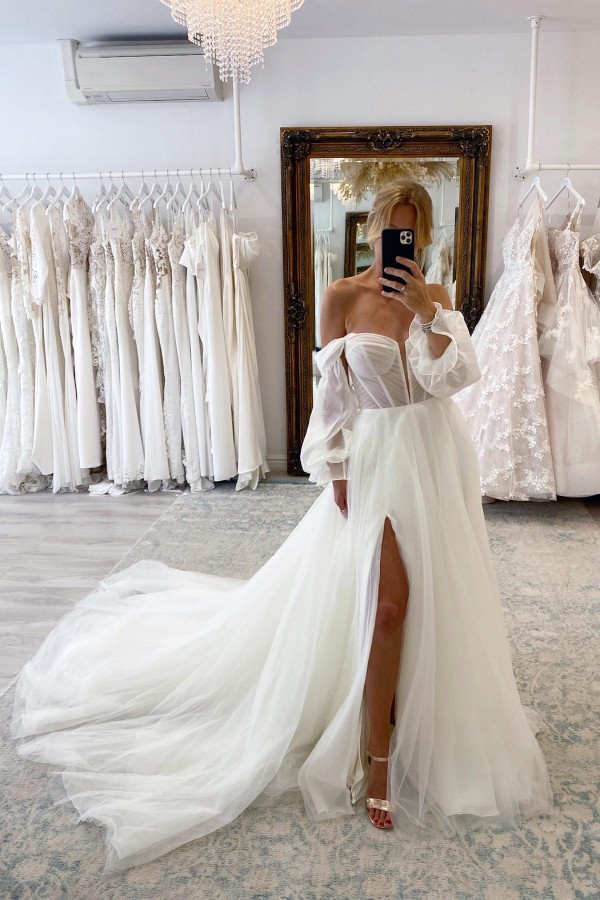
Fabric decides how it behaves
Satin has enough weight to fall closed between steps, so the split opens only as you move. Tulle and chiffon are light enough to float open and stay there, especially outdoors. If the reception is outside, weight the fabric choice more than the split height.
The two-look option
Some brides solve this by keeping the ceremony look covered and adding the split for the reception, either with a detachable overskirt or a second dress. It is not the cheapest answer, but it removes the compromise entirely.
Why Custom Sizing Sets Where the Split Lands
A split is defined by where it stops, and where it stops depends entirely on the hem length, which depends on you.
Hollow to Floor decides the split height
The design specifies the split as a distance from the hem, so a dress hemmed too long puts the split lower than intended and a dress hemmed short puts it higher. Take Hollow to Floor barefoot, standing straight, from the hollow between your collarbones to the floor.
The heel allowance is already added
We add an extra 2 inches to custom-sized floor-length dresses and dresses with trains. Do not add your own allowance on top, or the split will sit two inches higher than the design intends.
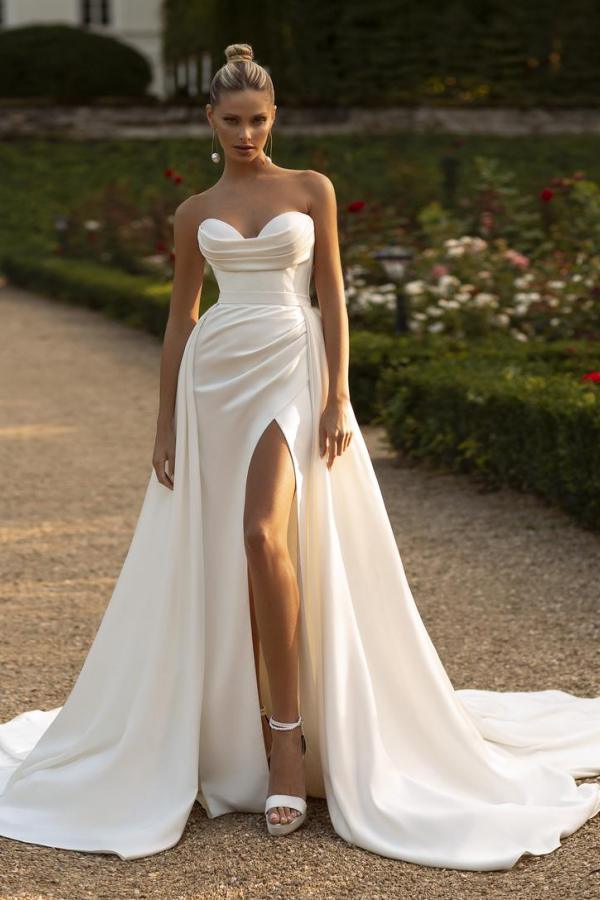
Lowering a split is possible, raising it is not
A tailor can close or shorten a split without much difficulty. Raising one means cutting into finished fabric and rebuilding the seam, often through lace or beading. Order the height you want.
Order timing for a wedding dress
Wedding dresses take 10 to 20 business days to make, plus 1 to 2 business days of processing and 9 to 15 business days of standard shipping in the United States. Plan on 5 to 8 weeks, and add time for local alterations.
Because every dress is made to order, we cannot accept a return when the measurements submitted were wrong. On a bridal timeline that matters more than usual, since there is rarely room to reorder.
Shop the Look
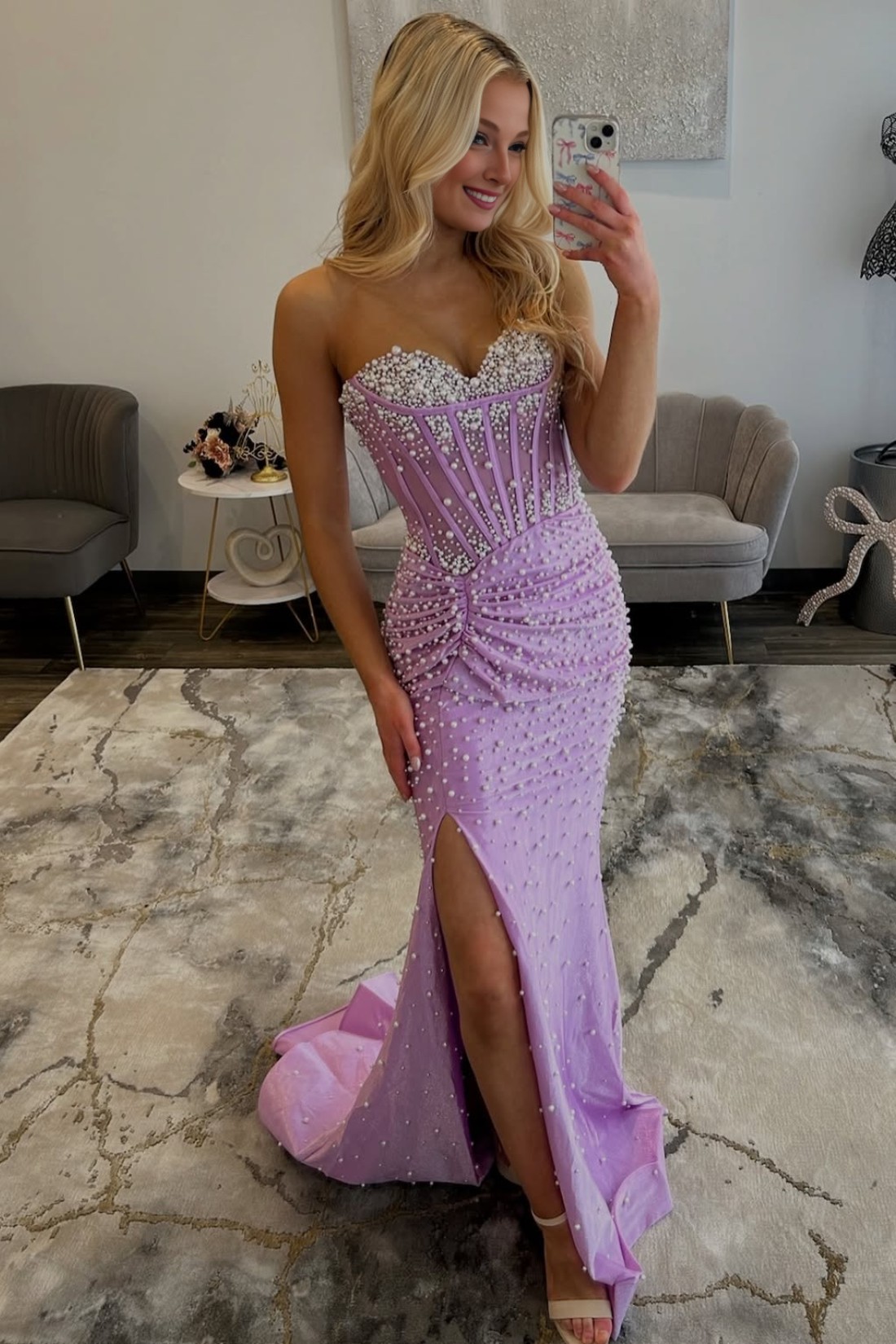
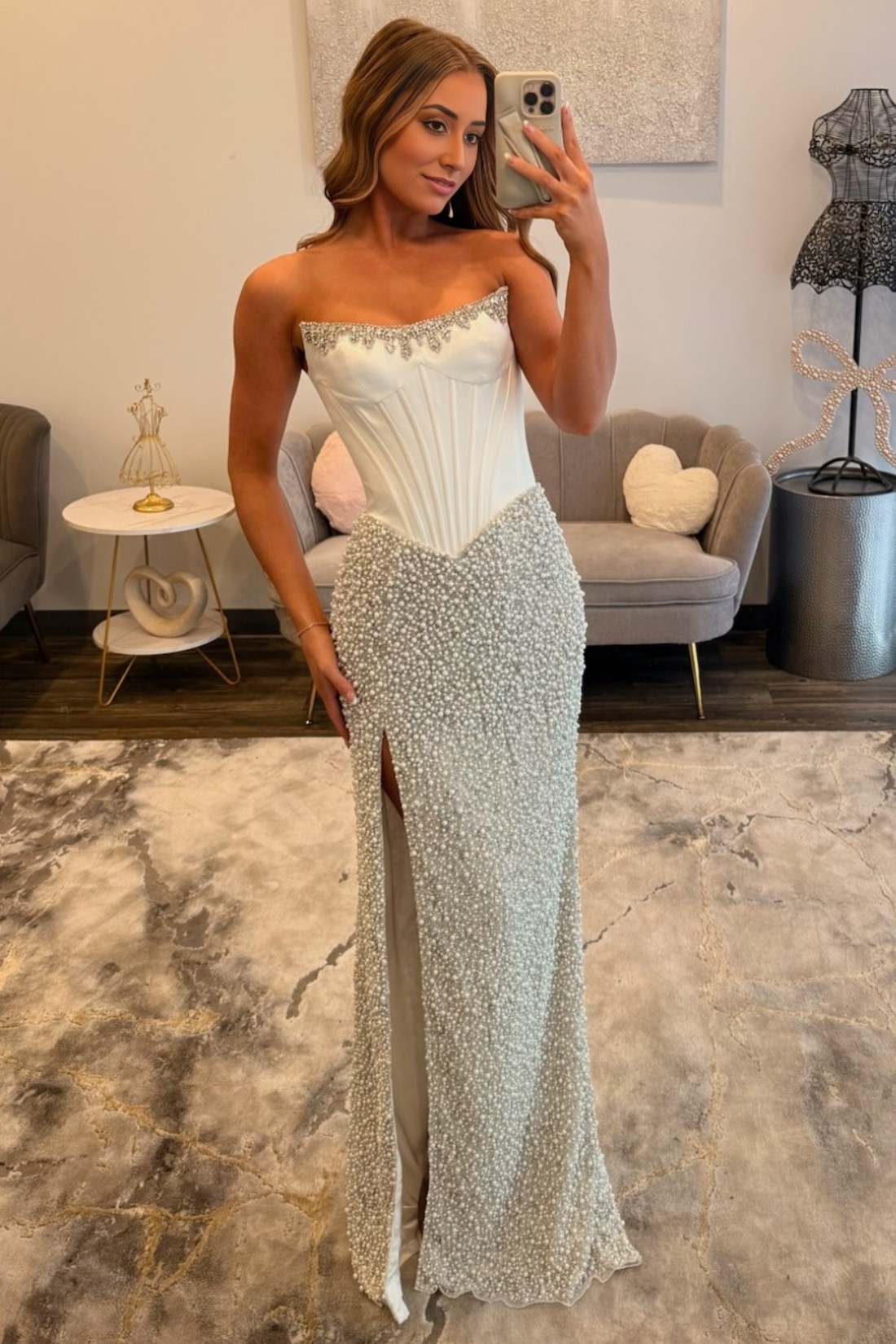
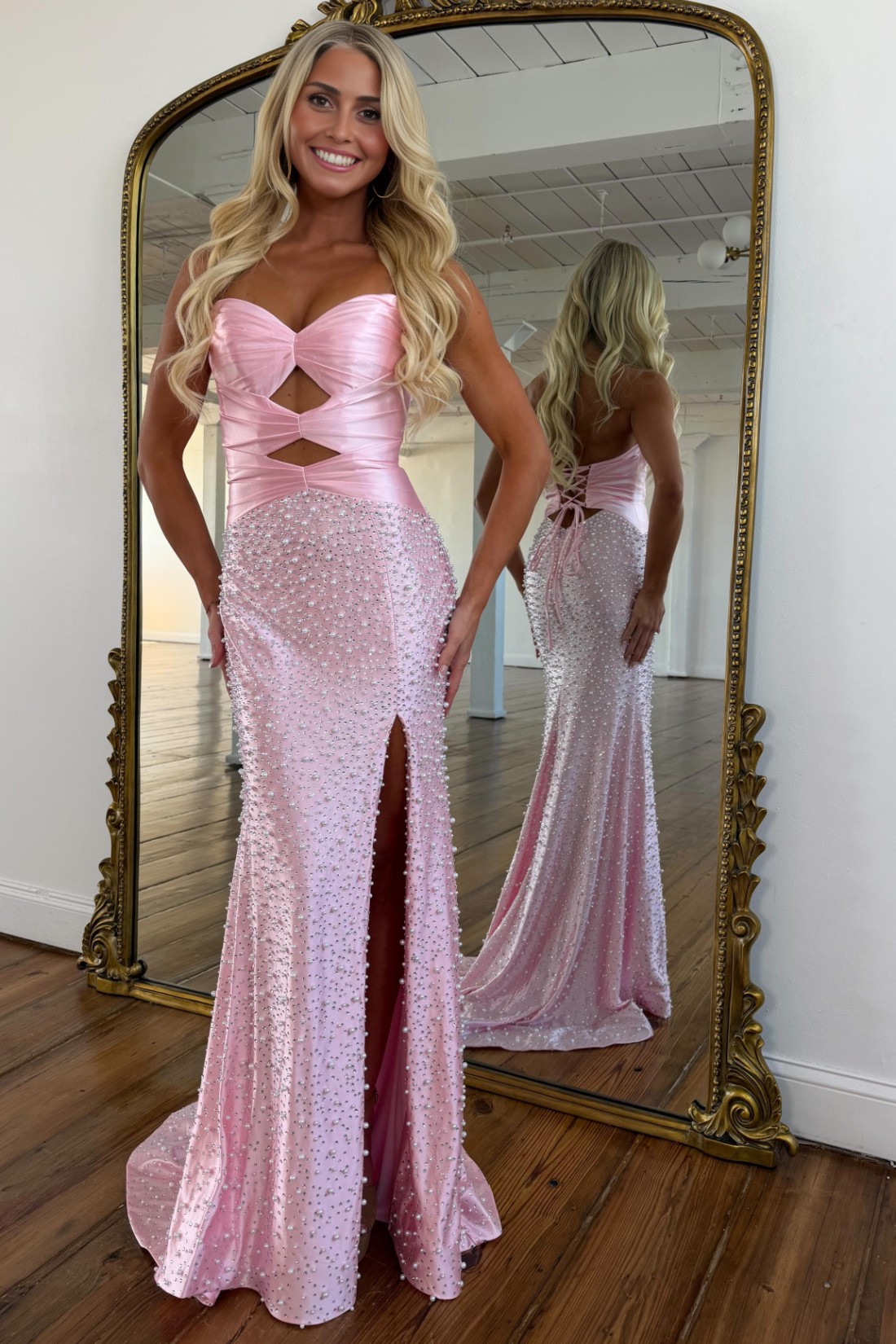
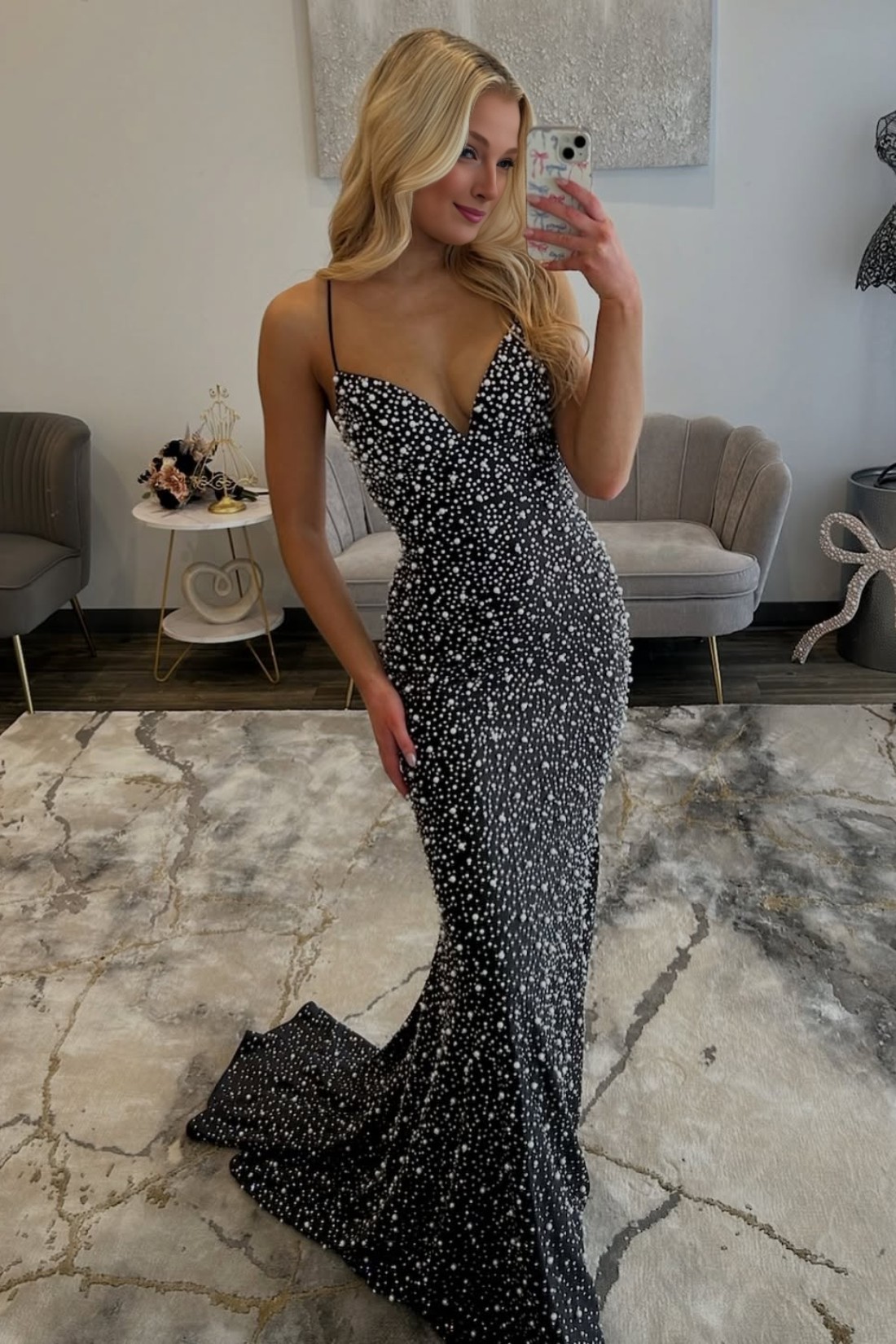
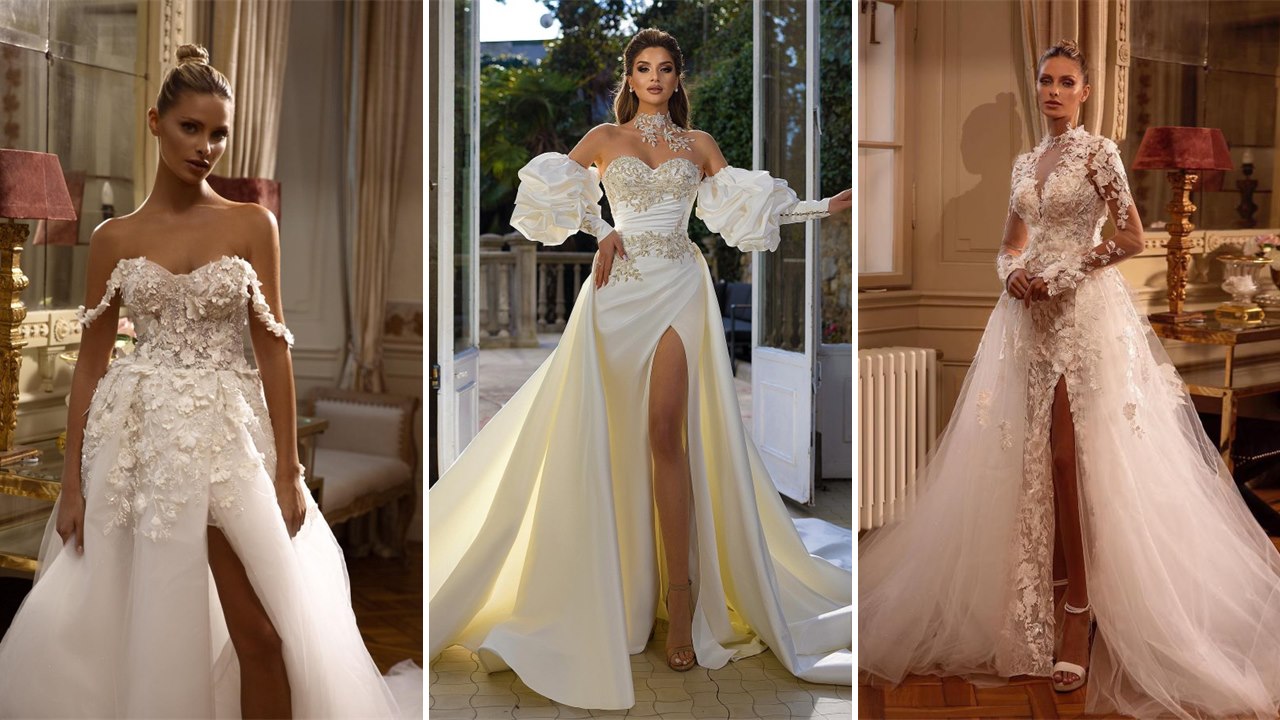
Six wedding dresses with a split, across satin and tulle so you can see how differently the two behave. If the ceremony matters more to you than the reception, start from the satin ones.
Elegant Long Mermaid Sweetheart Satin Lace Front Slit Wedding Dresses with Sleeves — satin holds the split closed between steps, the safest choice for an aisle.
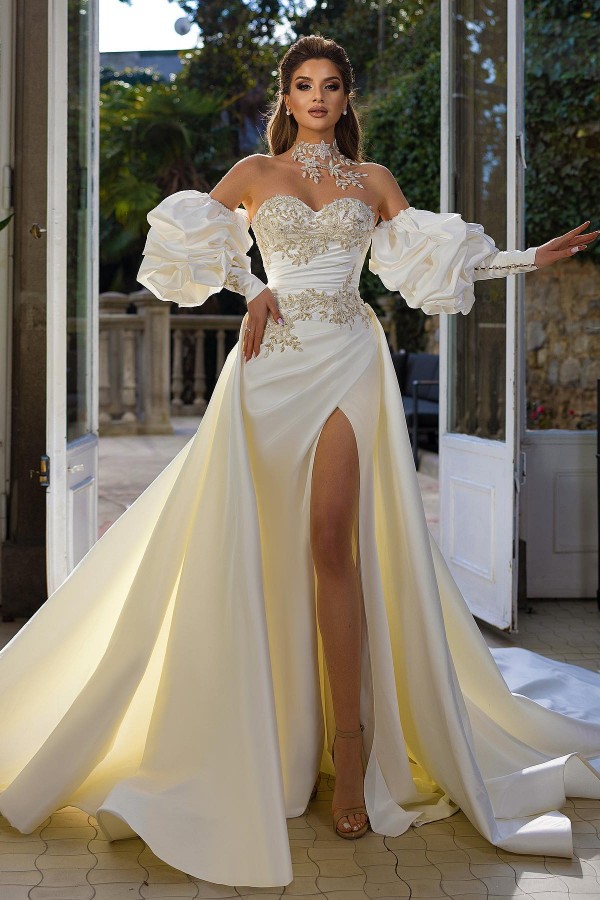
Long Sweetheart A-Line Sweetheart Tulle Lace Wedding Dress with Front Slit — an A-line skirt softens the split by giving it somewhere to sit.
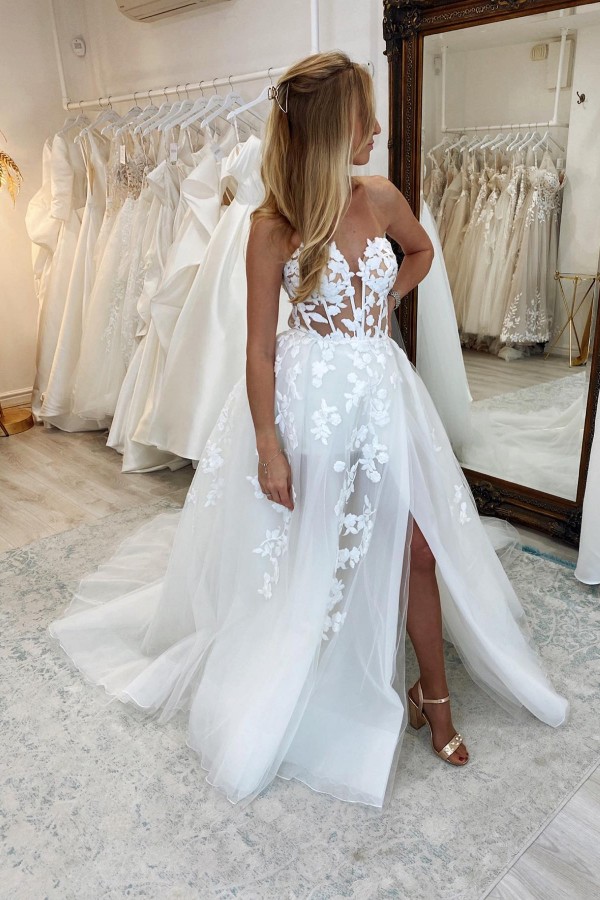
Charming Long Off the Shoulder A Line Floor Length Tulle Lace Wedding Dress with Slit — lace over the split edge makes it read as a design line rather than an opening.
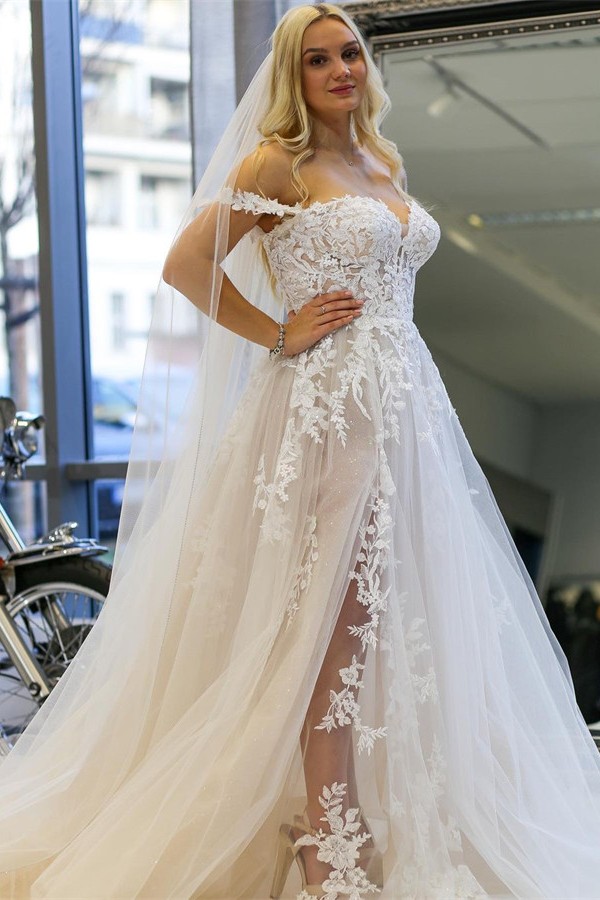
Gorgeous Long Sleeves Mermaid High Neck Tulle Lace Backless Wedding Dress with Slit — full coverage above, a split below, which balances well in a traditional venue.
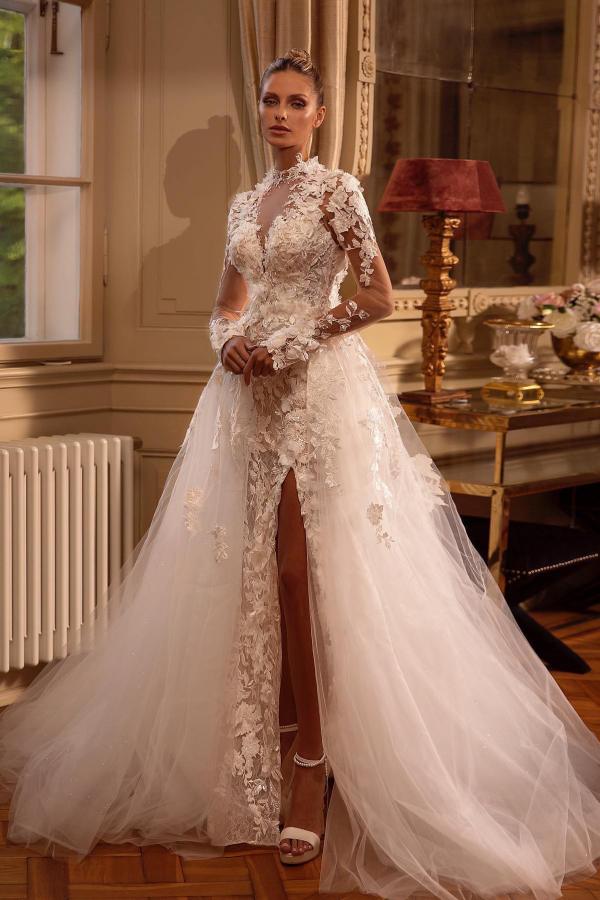
Charming Ivory Long Mermaid Strapless Floor Length Satin Wedding Dresses with Slit — heavy ivory satin, the most controlled split on this list.
Long Sleeves A Line Off the Shoulder Tulle Wedding Dress with Slit — tulle floats, so this one is a reception dress rather than an aisle dress.
Browse all wedding dresses, or narrow to mermaid wedding dresses where a split does the most work.
Frequently Asked Questions
Is a front split appropriate for a wedding ceremony?
It depends on the venue and the fabric more than on the split itself. Satin holds the split closed between steps, while tulle and chiffon float it open, and some traditional venues do publish expectations worth checking early.
Is a side split better than a front split for a bride?
For the ceremony, yes. A side split shows far less when you are viewed head on down an aisle, and it gives you exactly the same stride.
How high should the split be on a wedding dress?
Knee height restores a normal stride, which is the practical reason to have one at all. Anything higher is a styling choice rather than a functional one.
Can a split be closed after the dress arrives?
Yes, closing or shortening a split is straightforward for a tailor. Raising one is not, because it means cutting into finished fabric and rebuilding the seam, often through lace.
How long does a custom wedding dress take?
Wedding dresses take 10 to 20 business days to make, plus processing and 9 to 15 business days of standard shipping in the United States. Plan on 5 to 8 weeks and leave time for local alterations.
Which fabric works best with a split?
Satin, because its weight keeps the split closed at rest and opens it only as you move. Our guides to choosing a slit height and taking your measurements cover the numbers behind both decisions.
About the Author
Emma Whitfield writes about prom, homecoming and bridal dressing for Yesbabyonline, with a focus on fit and fabric. She spends most of her time on the questions that photographs cannot answer: how a fabric moves, where a seam sits, and whether you can still dance in it at midnight. She believes the right dress is the one you forget you are wearing.