Key Takeaways
| The armhole decides everything | Where the sleeve seam sits controls how far you can raise your arms, not the cuff. |
| Sleeves are not modest by default | Sheer, mesh and off-the-shoulder sleeves add coverage in outline only. |
| Off the shoulder restricts most | The sleeve pulls the bodice down when you lift your arms. Test it before the night. |
| Heat is real | Lined satin sleeves get warm by the second hour. Mesh, lace and chiffon do not. |
| Order timing | Plan on 4 to 7 weeks from order to doorstep for a custom-sized gown. |
A sleeve is judged at the shoulder, not at the wrist. Two dresses with identical long sleeves can feel completely different, because what limits your movement is where the armhole sits, not how much fabric covers your arm.
That single fact explains why some sleeved gowns feel effortless and others feel like you are wearing a costume you cannot move in. It also explains why trying on a friend's sleeved dress tells you almost nothing about how the same style would fit you.
Why the Armhole Matters More Than the Sleeve
The construction of a sleeve is older and more considered than most people assume.
The armscye is the opening, not the sleeve
As Wikipedia's entry on sleeves explains, the armscye is the armhole where the sleeve joins the garment, and the rounded sleeve cap was developed specifically to allow a fitted sleeve with enough ease at the head and a wider cut at the back for movement.

A seam sitting too low binds
If the shoulder seam sits out on the upper arm rather than at the shoulder point, the whole bodice rotates upward when you raise your arms. This is the single most common complaint about sleeved dresses, and it has nothing to do with sleeve length.
A seam sitting too high pulls
The opposite error is just as uncomfortable. A tight armhole digs in at the underarm within an hour and leaves a visible mark. There is no way to fix this afterwards without rebuilding the sleeve.
What Sleeves Actually Change
Sleeves do three things, and only one of them is coverage.
What a sleeve does for you:
- Balance — adds visual weight at the top to offset a full or fitted skirt
- Something to do with your arms — the reason group photographs improve
- Warmth — useful outdoors, a problem indoors
- Coverage — only if the fabric is opaque, which many are not
They are not automatically modest
A sheer mesh or lace sleeve gives you the outline of coverage and almost none of the substance. If a school dress code is the reason you are looking at sleeves, check whether the fabric is lined before assuming it qualifies.
They balance a heavy skirt
A full or heavily embellished skirt can leave the top of a dress looking bare by comparison. A sleeve adds visual weight where it is needed, which is why sleeved gowns often photograph as more expensive than their strapless equivalents.

They solve the strapless adjustment
Nobody looks relaxed while quietly pulling a strapless bodice up. A sleeve removes that problem entirely, which is worth more across an evening of photographs than any styling detail.
Choosing Between the Sleeve Types
The four you will meet most often behave very differently once you are wearing them.
Fitted long sleeves
The most formal and the most demanding of the armhole. When the seam is right they are invisible to wear; when it is wrong they are the most restrictive option on this list.
Off the shoulder sleeves
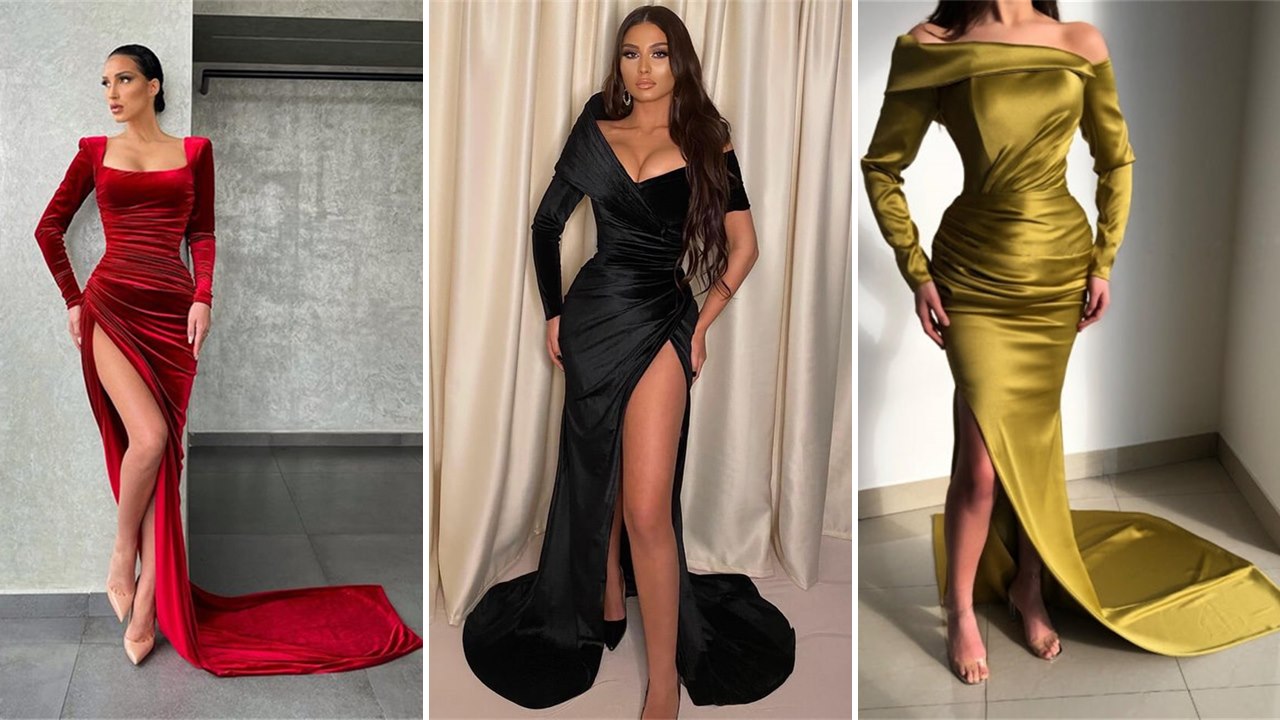
The most restrictive by design. The sleeve is anchored below the shoulder, so raising your arms pulls the bodice down rather than moving with you. Beautiful standing still, awkward on a dance floor.
Sheer and mesh sleeves
The most comfortable and the coolest. The arm is visible through the fabric, so they read as decoration rather than coverage, and they move with you because the fabric has give.

Draped and cape sleeves
Fabric that falls from the shoulder without wrapping the arm. They give you movement and drama at once, and they are the most forgiving of a fit that is not exact.
Detached and cold shoulder sleeves
A sleeve that starts below a strapless bodice, rather than joining it, sidesteps the armhole problem entirely. There is no seam to bind, because the sleeve is not structurally connected to the bodice at all.
These read as dramatic rather than modest, since the shoulder itself stays bare. They are the easiest sleeved option to move in and the one to choose if you want the look without any of the restriction.
Where the cuff ends changes the proportion
A sleeve ending at the wrist bone lengthens the arm. One ending mid-forearm cuts it, which is why three-quarter sleeves are harder to wear on a formal gown than on daywear.
A flared or bell cuff hides the wrist entirely and adds width at the lowest point of the arm, which balances a full skirt but competes with a fitted one.
Why Custom Sizing Decides a Sleeved Dress
Arm width and bust size do not scale together, which is why standard sizing fails most visibly on sleeves.
The shoulder point is personal
Two people with identical bust measurements can have shoulders two inches apart in width. A standard size places the shoulder seam by average, and on a sleeved dress that average is what binds or drags.
Measure your bust, not your bra
Your bra size is not your bust measurement. Wear an unpadded bra, relax your arms at your sides, and pull the tape across the fullest part of the bust. Our dresses have a built-in bra, so a padded one gives a reading that is too large.
Do the arms-up test on arrival
Raise both arms above your head and hold for five seconds. A fitted bodice will ride up slightly, which is normal. If the sleeve restricts the movement itself, or the hem lifts off the floor by more than an inch, the armhole is wrong for you.

A sleeve cannot be recut
A tailor can shorten a sleeve or take in its width. Moving the armhole means detaching the sleeve and rebuilding the seam, which is rarely worth doing. Order timing is 7 to 15 business days of production plus processing and 9 to 15 business days of standard shipping, so plan on 4 to 7 weeks.
Because every dress is made to order, we cannot accept a return when the measurements submitted were wrong.
Shop the Look
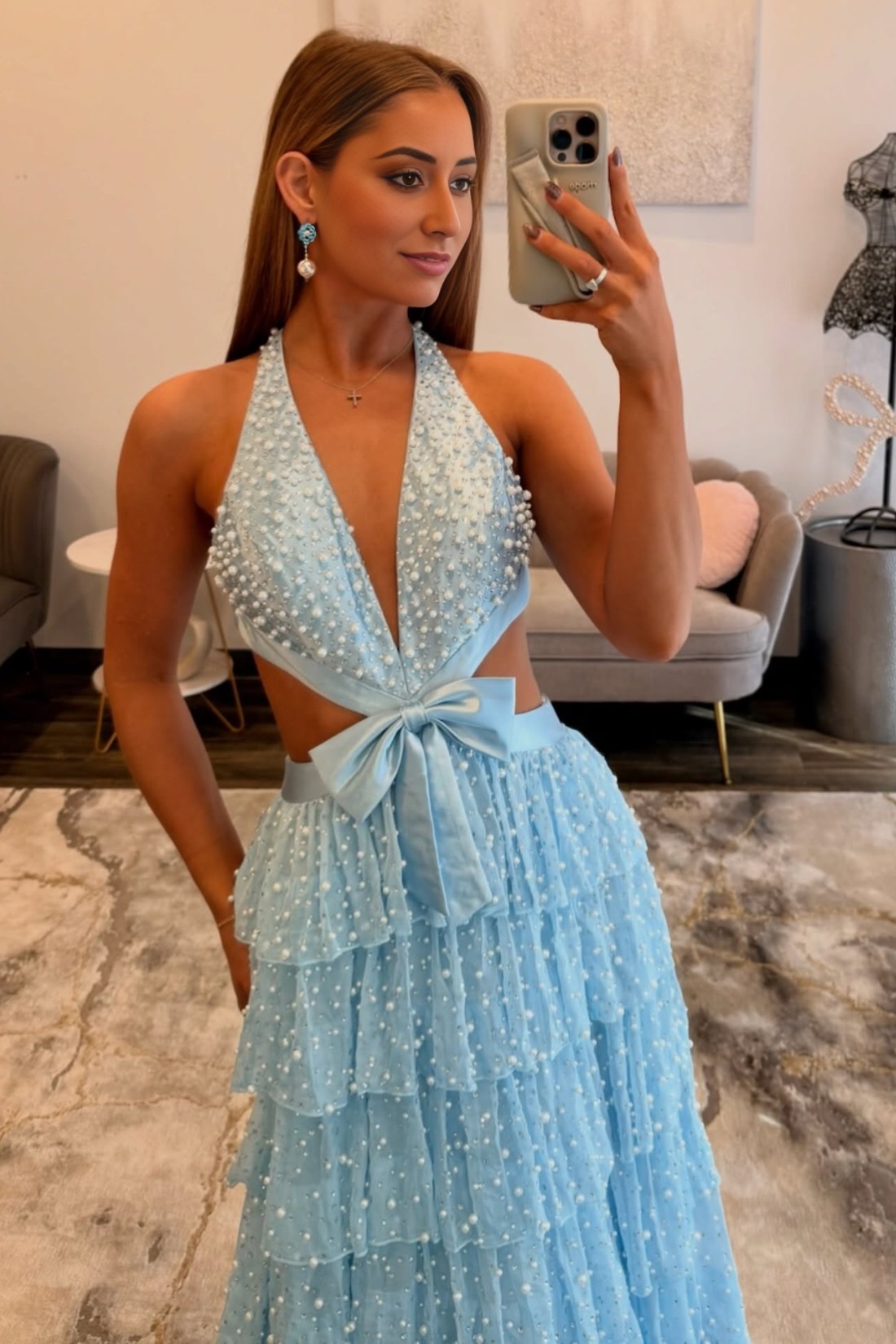
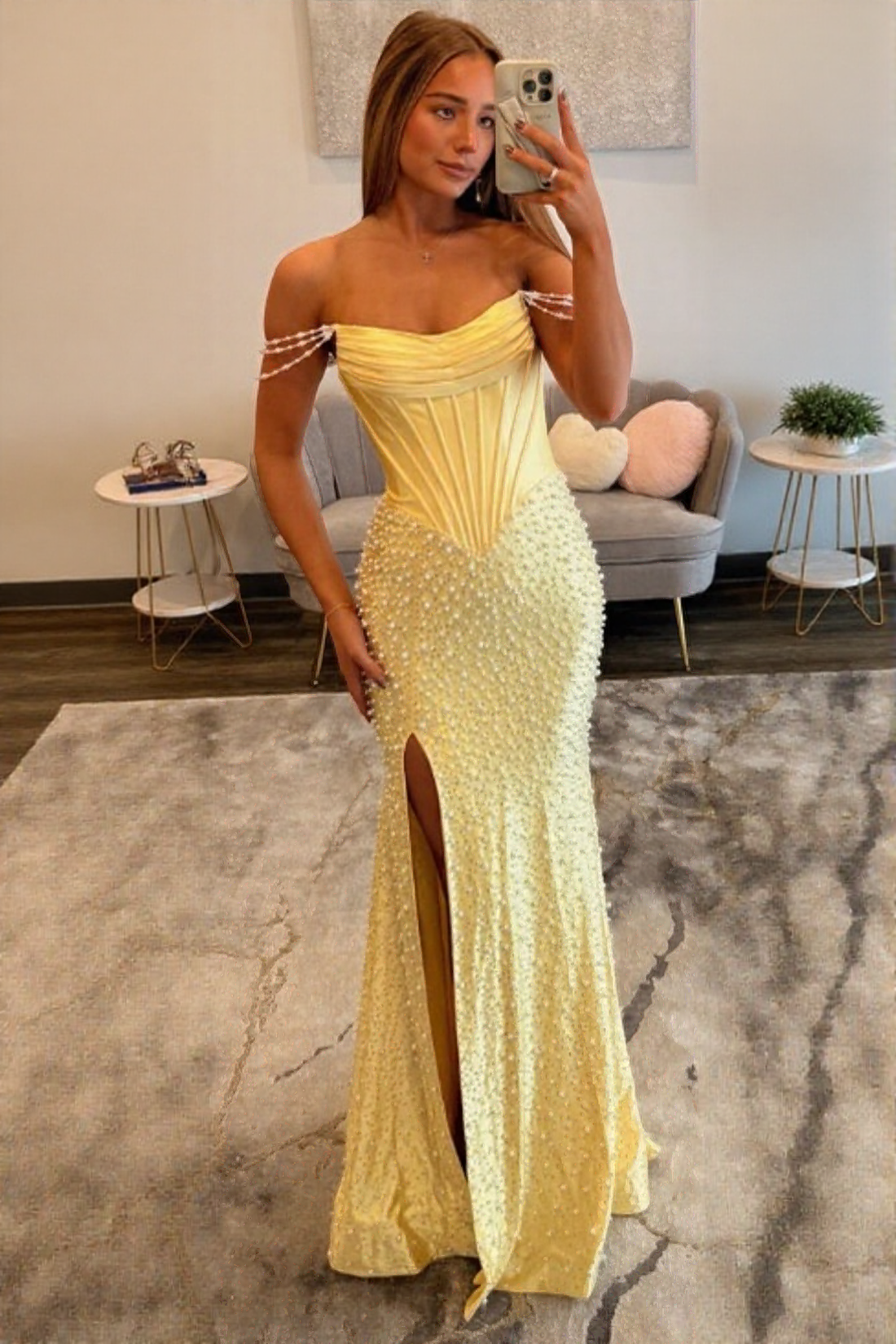
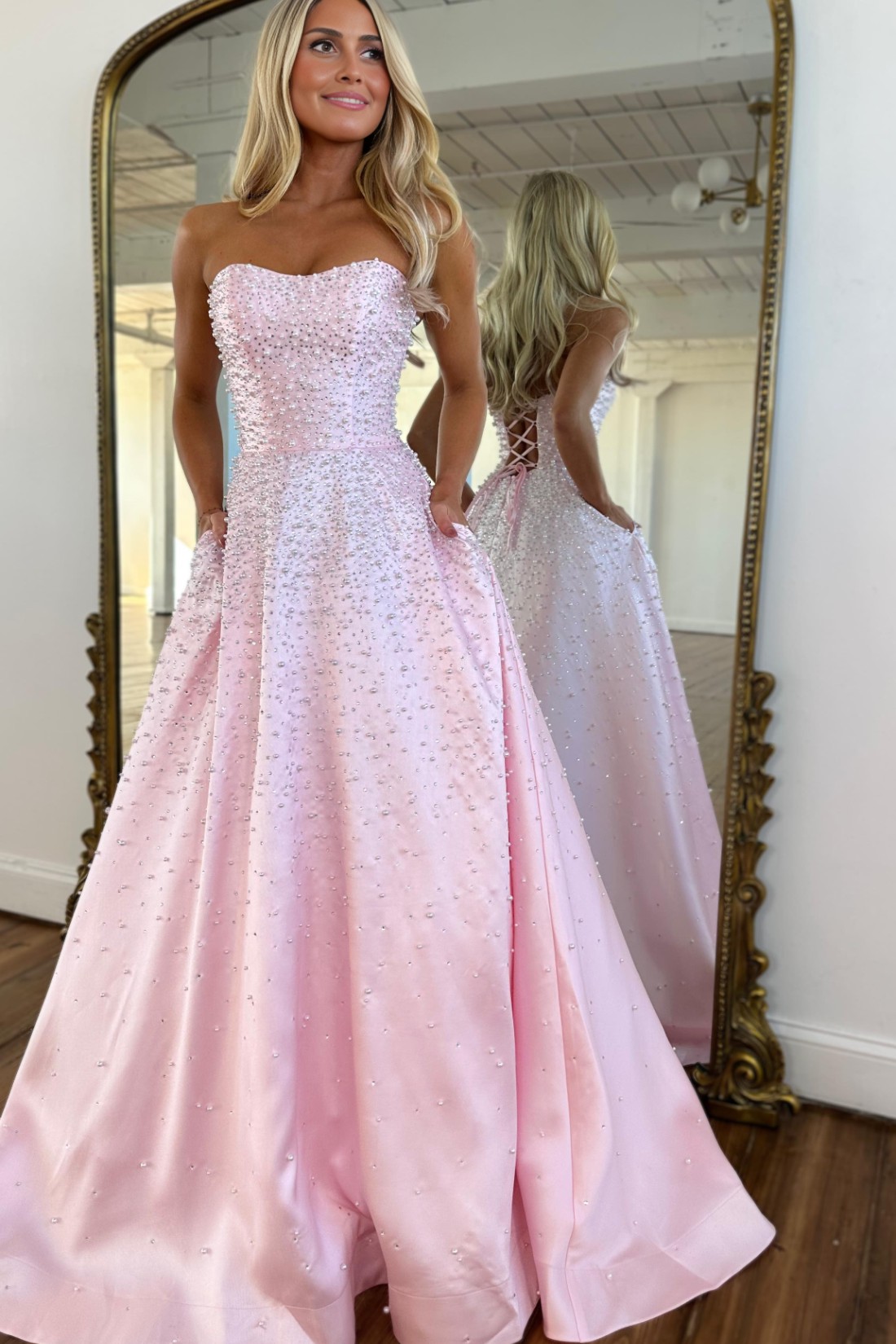
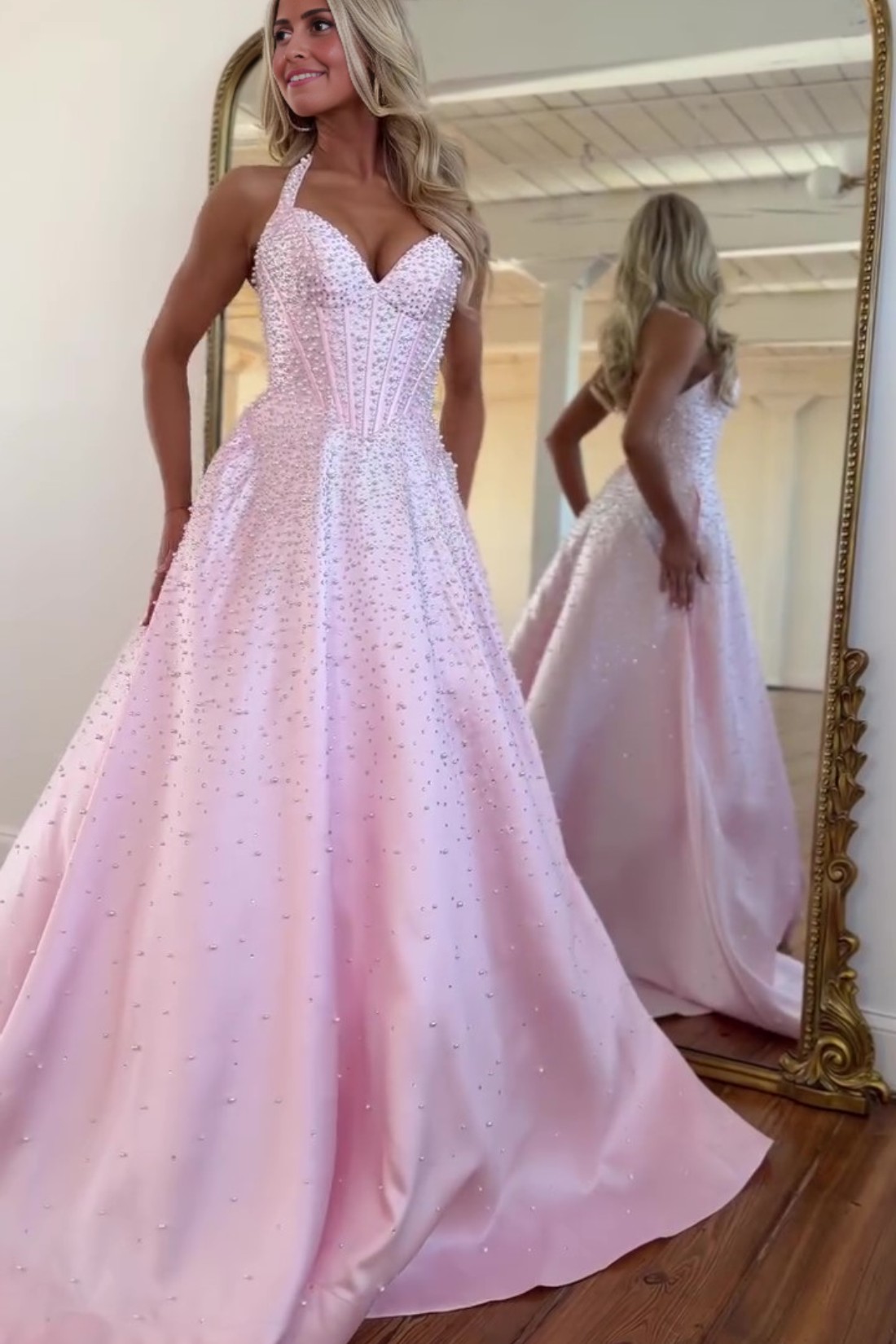
Six sleeved gowns across fitted, off the shoulder and sheer, so you can compare how each armhole is built. Look at where the shoulder seam sits in each photograph, because that single point tells you more about how the dress will feel than the sleeve length ever will.
Elegant Long Sleeves Mermaid Off-The-Shoulder Satin Prom Dresses with Split — the off-the-shoulder version, so test the arms-up movement carefully.

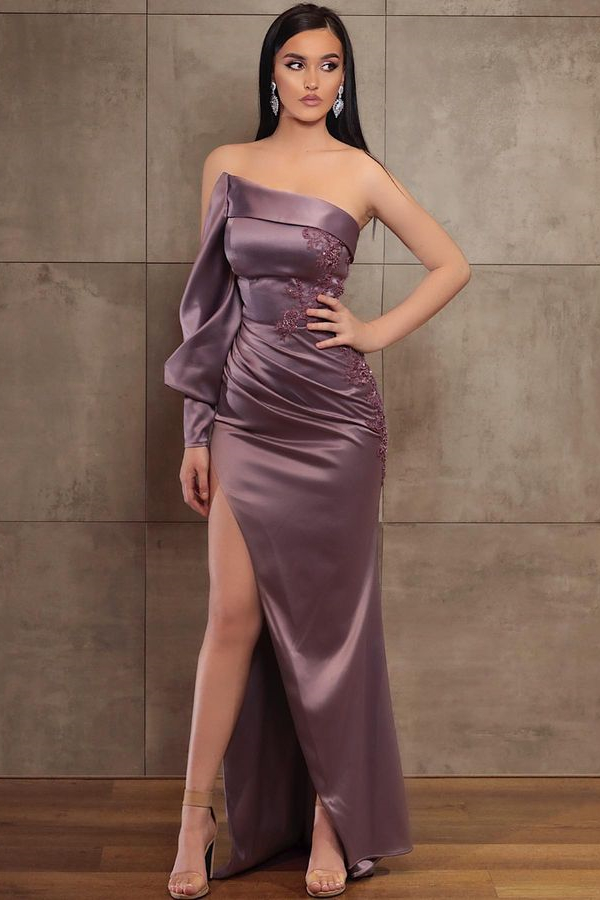
Sexy Long Sleeves Mermaid Floor-Length Strapless Satin Prom Dresses with Split — sleeves detached from the bodice, which gives movement without the pull.
Long Sleeves V-Neck Lace Mermaid Formal Prom Dresses — lace sleeves, the coolest option here and the easiest to move in.

Stunning Off-The-Shoulder Long Sleeves Mermaid Satin Prom Dresses with Split — satin sleeves that hold their shape rather than collapsing.
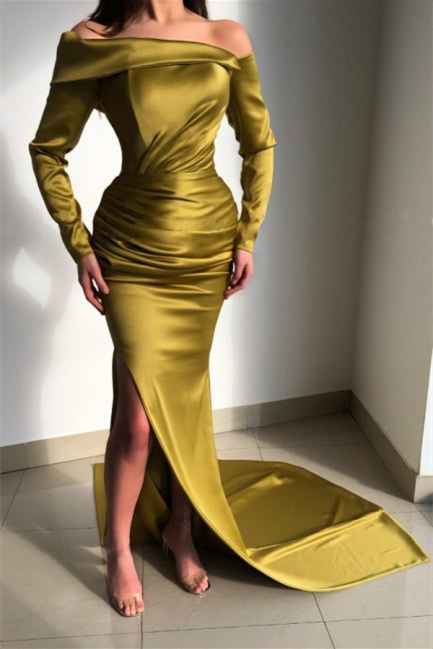
Charming Long Sleeves Off-The-Shoulder Floor-Length Satin Prom Dresses with Split — a wider sleeve head, which eases the off-the-shoulder problem.
Fabulous V-Neck Long Sleeves Satin Mermaid Prom Dresses with Split — a conventional set-in sleeve, the most reliable of the group.
Browse all long sleeves prom dresses, or widen out to the full prom dresses range.
Frequently Asked Questions
Do sleeves make a prom dress more modest?
Only if the fabric is opaque. Sheer mesh and lace sleeves give the outline of coverage with very little substance, so check whether they are lined if a dress code is the reason you want them.
Why can I not raise my arms in a sleeved dress?
Because the armhole sits too low, on the upper arm rather than at the shoulder point. That makes the whole bodice rotate upward when you lift your arms, and it cannot be fixed without rebuilding the sleeve.
Are off the shoulder sleeves restrictive?
Yes, more than any other type. The sleeve is anchored below the shoulder, so raising your arms pulls the bodice down instead of moving with you.
Are long sleeves too hot for prom?
Lined satin sleeves get warm by the second hour in a crowded room. Mesh, lace and chiffon sleeves move air well and stay comfortable all evening.
Can a tailor alter the sleeves?
Shortening a sleeve or taking in its width is straightforward. Moving the armhole means detaching the sleeve and rebuilding the seam, which is rarely worth the cost.
Which sleeve should I choose if I will be dancing?
A sheer, lace or draped sleeve, because all three move with the arm rather than anchoring it. Our guides to sleeves on short dresses and one shoulder fit cover the same shoulder question from other angles.
About the Author
Emma Whitfield writes about prom, homecoming and bridal dressing for Yesbabyonline, with a focus on fit and fabric. She spends most of her time on the questions that photographs cannot answer: how a fabric moves, where a seam sits, and whether you can still dance in it at midnight. She believes the right dress is the one you forget you are wearing.