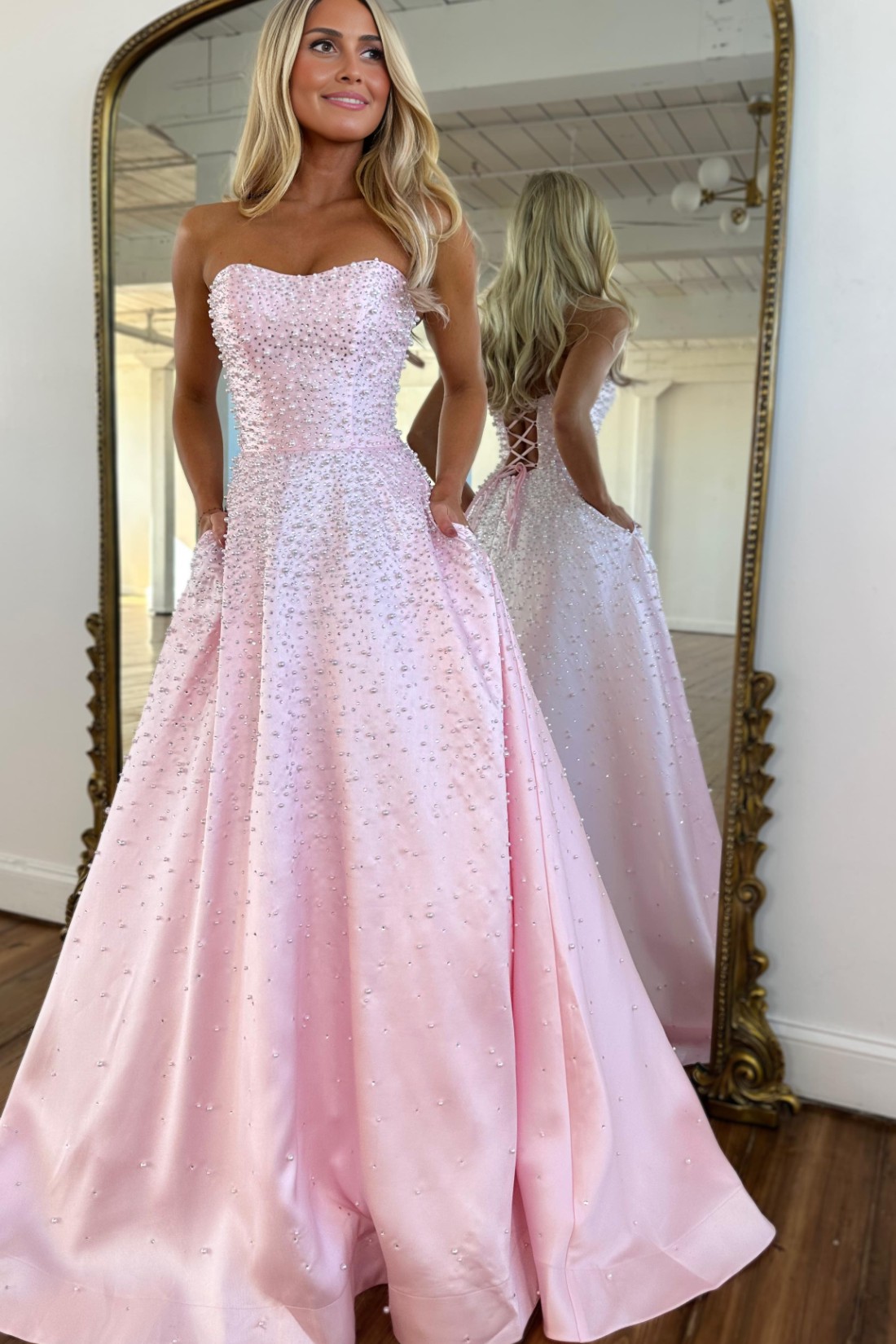
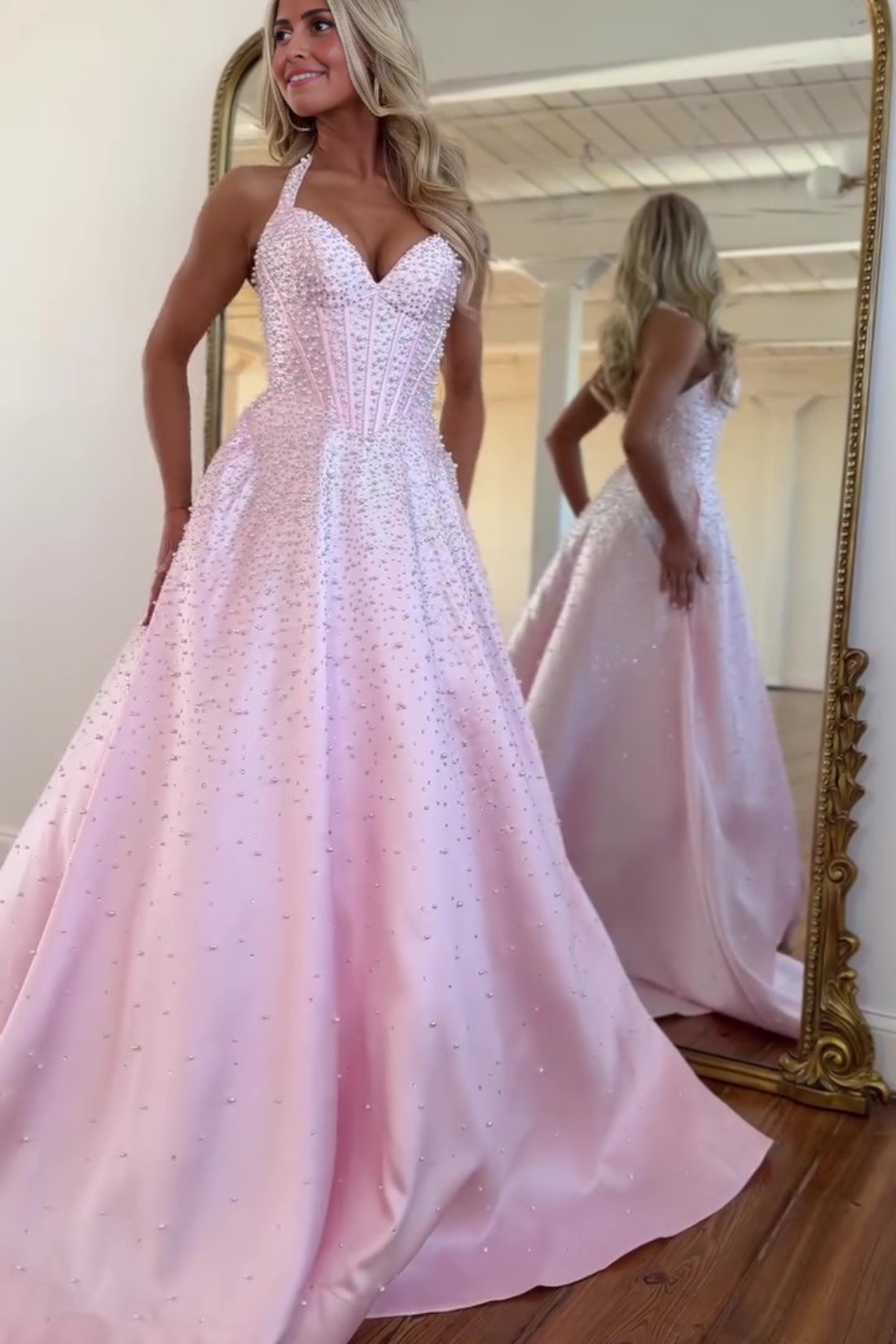
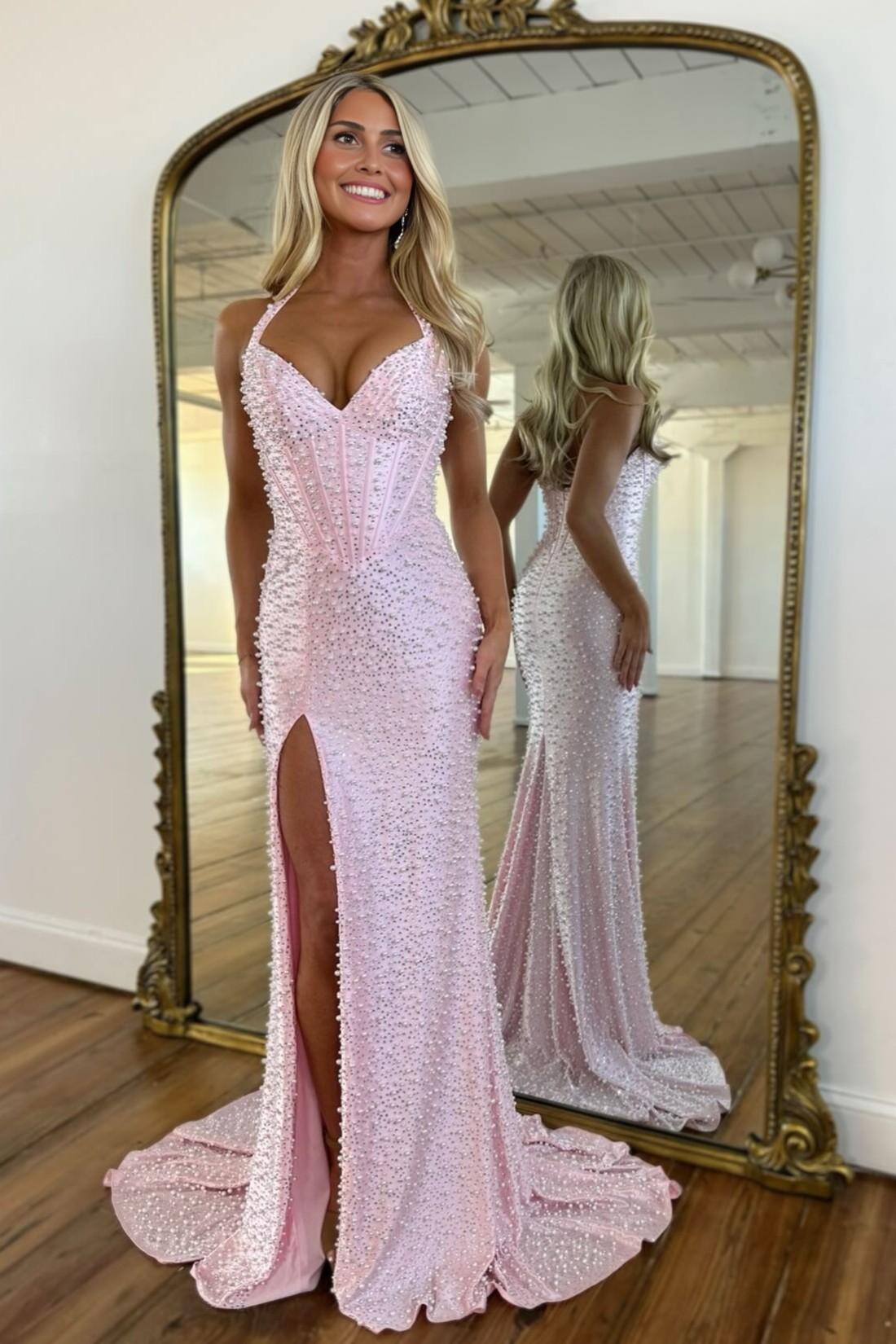
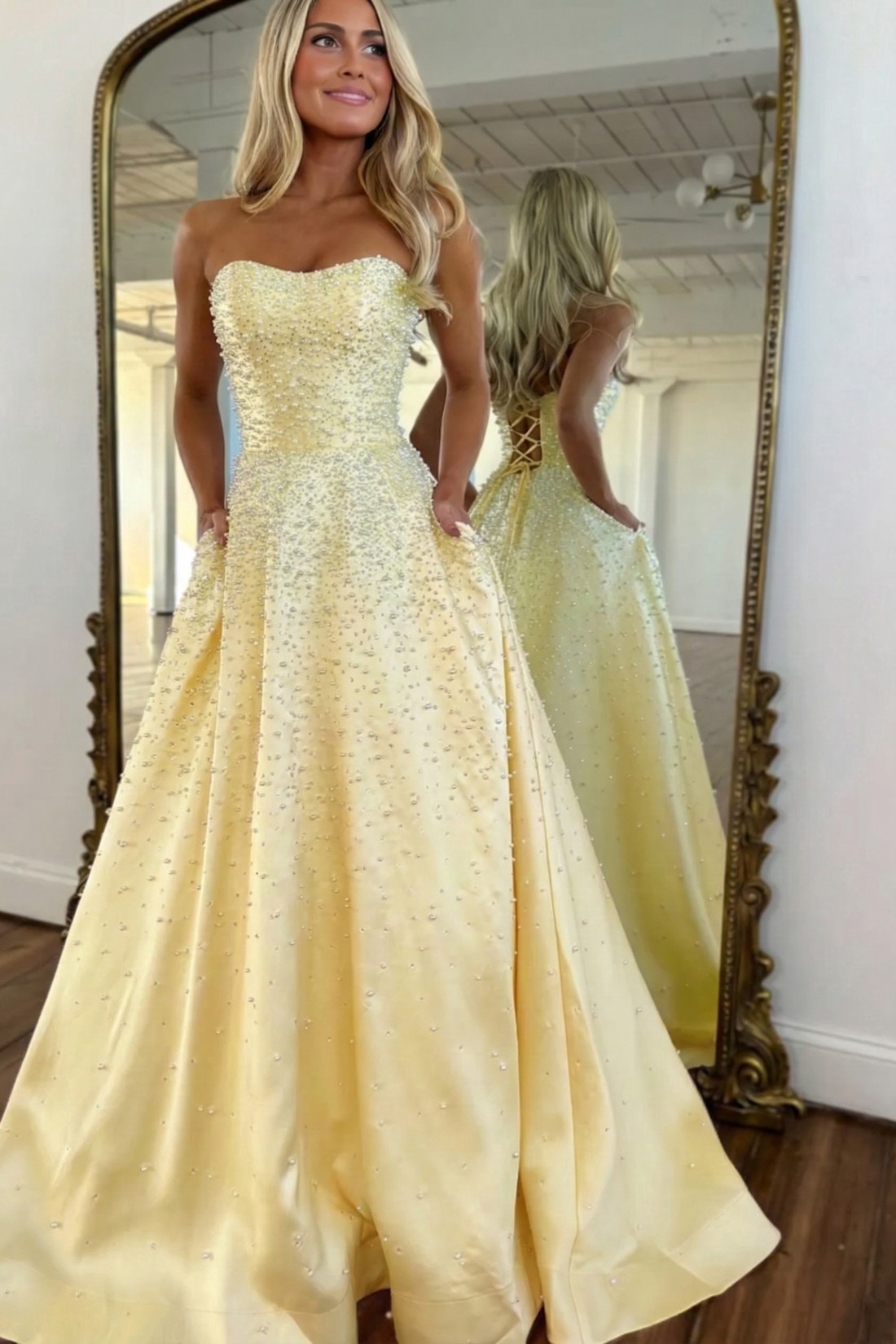
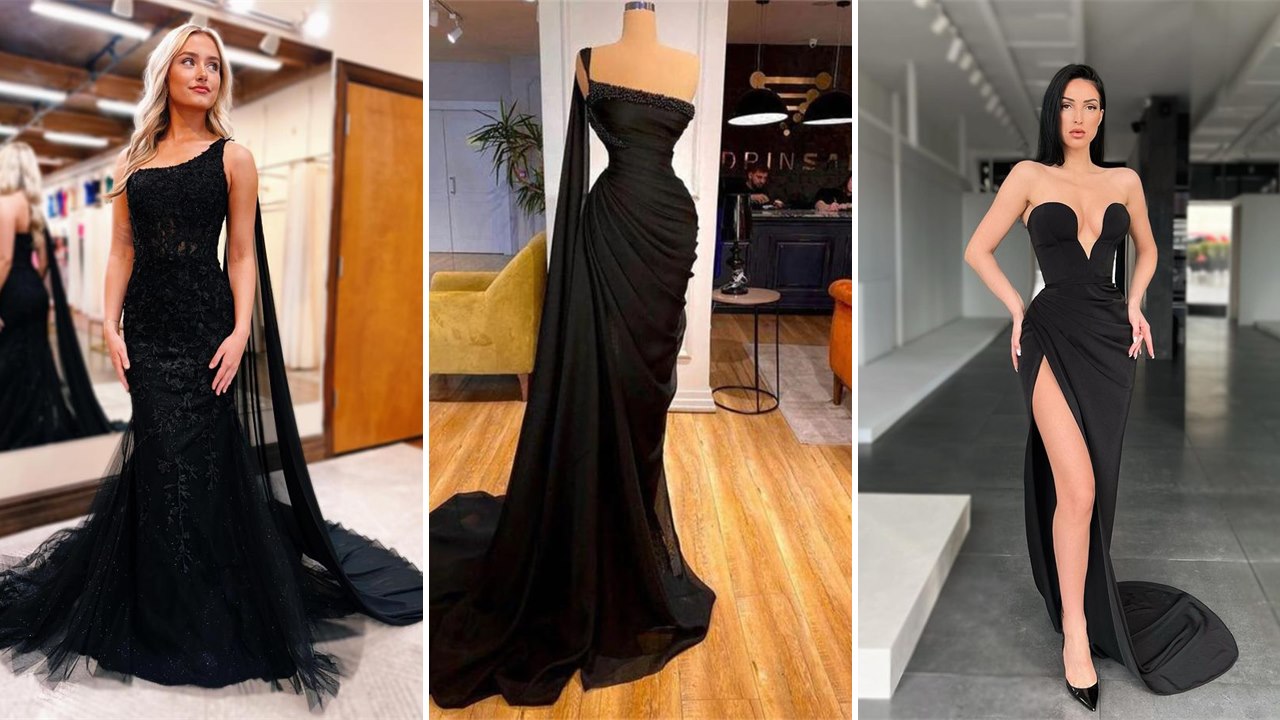
Key Takeaways
| Black is a surface, not a colour | The dye is the same across our fabrics. What changes is how much light the weave throws back. |
| Satin | Reflects in one direction, so the black shows highlights and reads sculptural and formal. |
| Chiffon | Matte and slightly sheer, so the black reads softer and lighter, closest to a deep charcoal in daylight. |
| Elastic satin | Satin's sheen with stretch, so the black follows the body and the highlights move as you do. |
| Order timing | Plan on 4 to 7 weeks from order to doorstep for a custom-sized gown. |
Two black dresses from the same dye lot can look like two different colours. That is not a printing error in the photos, and it is not your screen. It is the fabric.
Black is defined by how little light comes back to the eye, so anything that changes the surface changes the colour. Satin throws light back in one direction. Chiffon scatters almost none. The dye never moved.
Why Black Is Not One Colour
This is the part that makes everything else predictable, and it takes about a minute to understand.
Black is the absence of returned light
As Wikipedia's entry on the colour black puts it, pigments and dyes that absorb almost all light rather than reflecting it back to the eye look black. So the more light a surface returns, the less black it reads.
The weave decides how much comes back
A satin weave floats yarns over several threads before interlacing, which creates a smooth plane that reflects light in one direction. Chiffon is a fine, open, matte weave that scatters what little it returns. Same dye, different amount of returned light, different black.
Sequins and beads break the rule deliberately
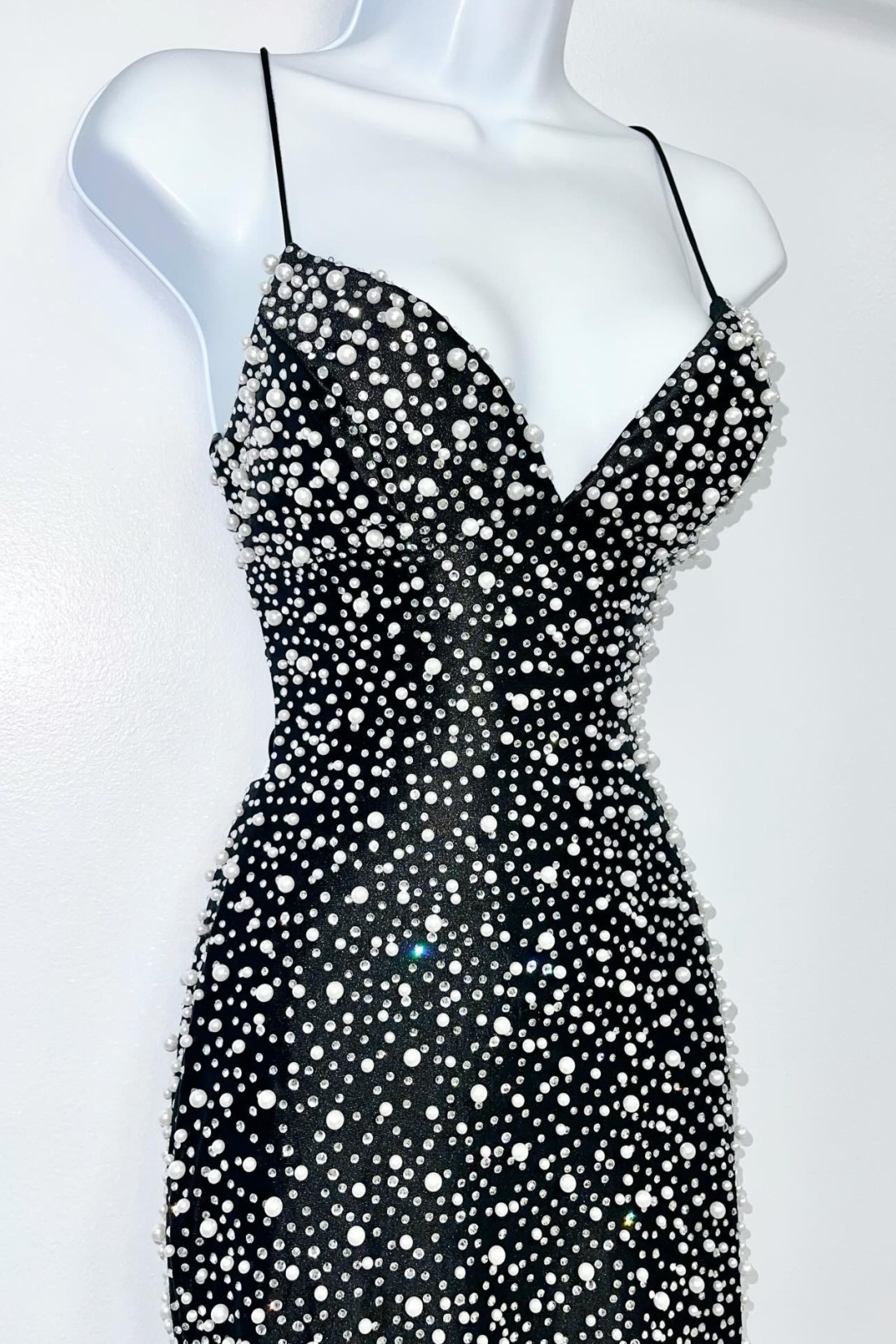
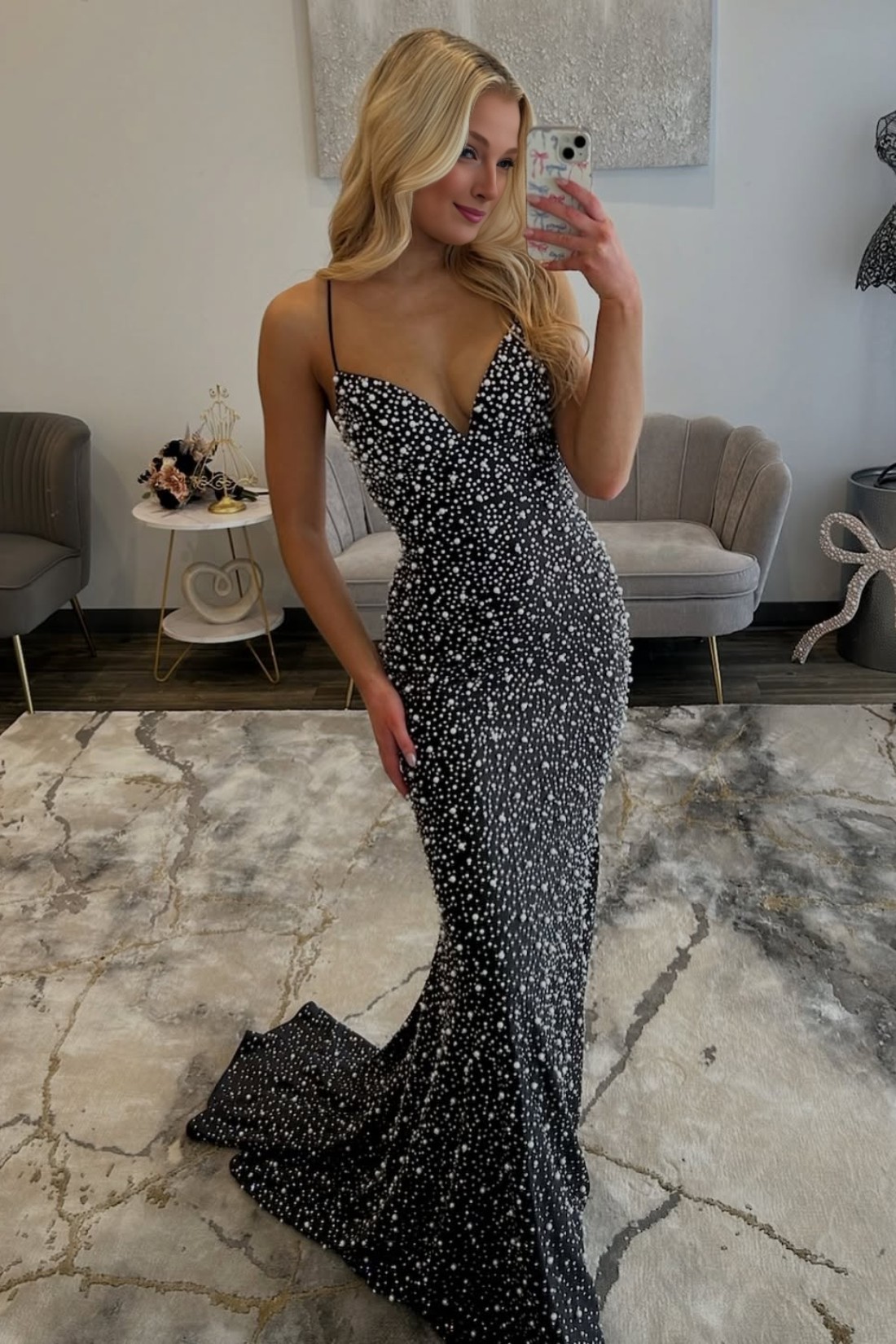
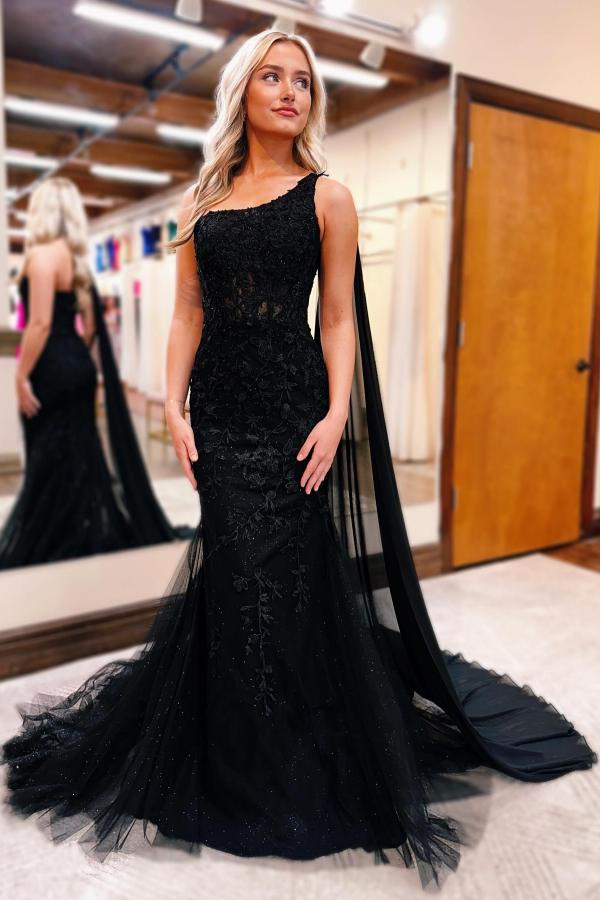
A black sequined dress is not really trying to be black. Each sequin is a tiny mirror, so the dress reads as a texture of moving highlights over a dark ground. That is why black sequin photographs so well and matte black sometimes disappears.
Our colour charts show the same names across fabrics
Our Satin, Chiffon and Elastic Satin charts all list the same colour names, Black included. That is deliberate, so you can match across fabrics within one group of friends. It also means the swatch name alone will not tell you how the dress will look.
The Same Black in Three Fabrics
Here is what actually changes when you hold the same shade in each of the three.
Choose by the effect you want:
- Formal and sculptural — black satin
- Soft and photograph-friendly outdoors — black chiffon
- Fitted with some give — black elastic satin
- Detail under flat lighting — black sequin or lace over black
Black in satin
The most formal of the three and the most demanding. Highlights run along every curve, which is flattering when the fit is right and merciless when it is not. This is the black that reads as evening rather than party.
Black in chiffon
Softer, lighter and slightly translucent in layers. In daylight it can read closer to deep charcoal than to true black, which is exactly why it works for outdoor photographs where satin turns into a dark shape with no detail.
Black in elastic satin
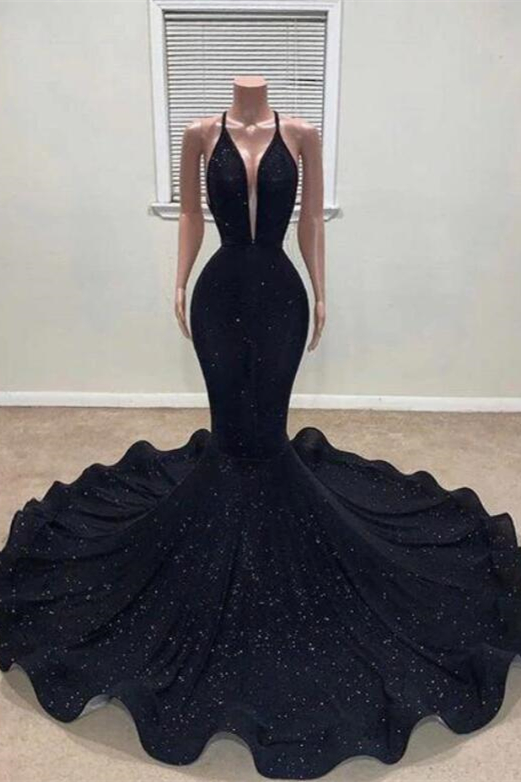
The compromise. You keep satin's sheen but gain stretch, so the fabric follows the body instead of sitting over it. The highlights shift as you move rather than staying fixed, which is more forgiving than woven satin.
Black with lace over it
Lace over a black lining is a fourth option that behaves unlike the other three. The pattern casts tiny shadows onto the layer beneath, so the surface has depth without any sheen at all.
This is the version that photographs most consistently across every kind of lighting, because the detail comes from texture rather than from reflection. It is also the least demanding on fit, since a busy surface breaks up drag lines.
Two blacks in one dress
A satin skirt with a lace or tulle bodice puts two different blacks on the same garment on purpose. The contrast reads as deliberate design rather than as a mismatch, and it gives the eye a defined waistline without a belt.
Choosing Your Black by Room and Camera
Black behaves differently under every light source you will meet on the night, and the venue tells you more than the swatch does.
Under a flash
Satin catches a flash and produces a bright band across the body. Chiffon absorbs it. Sequin scatters it evenly. If most of your photographs will be flash portraits, avoid large unbroken planes of satin or choose a beaded satin instead.
Under warm ballroom lighting
Warm downlights bring out the depth in satin and make chiffon look flat. This is the setting where a black satin gown looks the most expensive it will ever look.
Under a gymnasium fluorescent
Overhead fluorescents flatten everything and pull warmth out. Matte black can read as a silhouette with no detail. Sequin, beading or a lace overlay gives the eye something to catch.
In daylight, before the dance
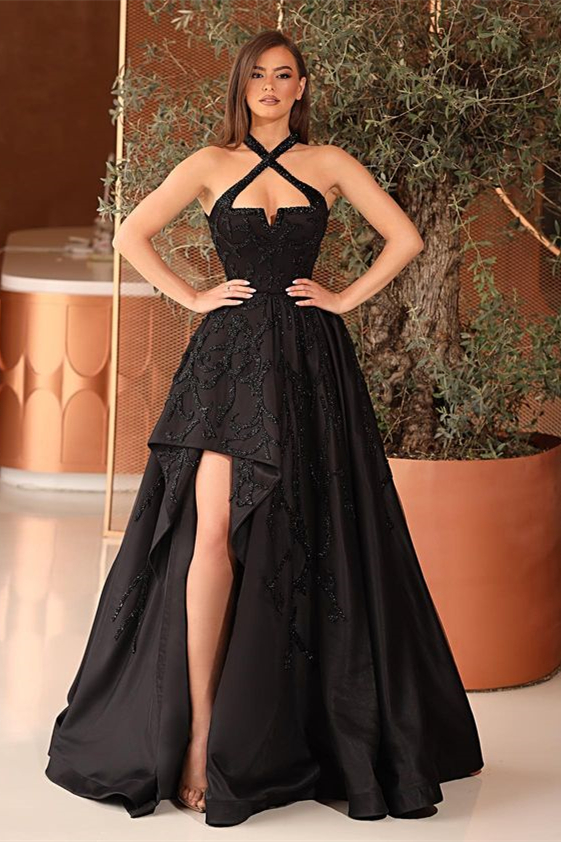
Outdoor photographs are usually taken in the hour before sunset, which is warm and low. Chiffon and lace hold detail in that light. Heavy satin can turn into a black shape with the seams invisible.
Why Custom Sizing Shows More on Black
Black hides colour, not shape. A poorly fitted black satin gown is one of the most obvious garments there is, because every drag line becomes a bright highlight.
Highlights map the fit
On satin, any place the fabric pulls creates a straight, shining line. Any place it is loose creates a ripple with its own highlight. The colour that supposedly hides everything is the one that draws the eye to every fit problem.
Measure your bust, not your bra
Your bra size is not your bust measurement. Wear an unpadded bra, relax your arms at your sides, and pull the tape across the fullest part of the bust. Our dresses have a built-in bra, so a padded one gives a reading that is too large.
Take Hollow to Floor barefoot
Stand straight with your feet together and measure from the hollow between your collarbones straight down to the floor. We add an extra 2 inches to custom-sized floor-length dresses and dresses with trains, so do not add a heel allowance yourself.
Black sequin cannot be let out
A sequined seam allowance is covered in sequins that would have to be removed and replaced. Because every dress is made to order, we cannot accept a return when the measurements submitted were wrong, so order sequin closer to your true numbers than you would order chiffon.
Shop the Look
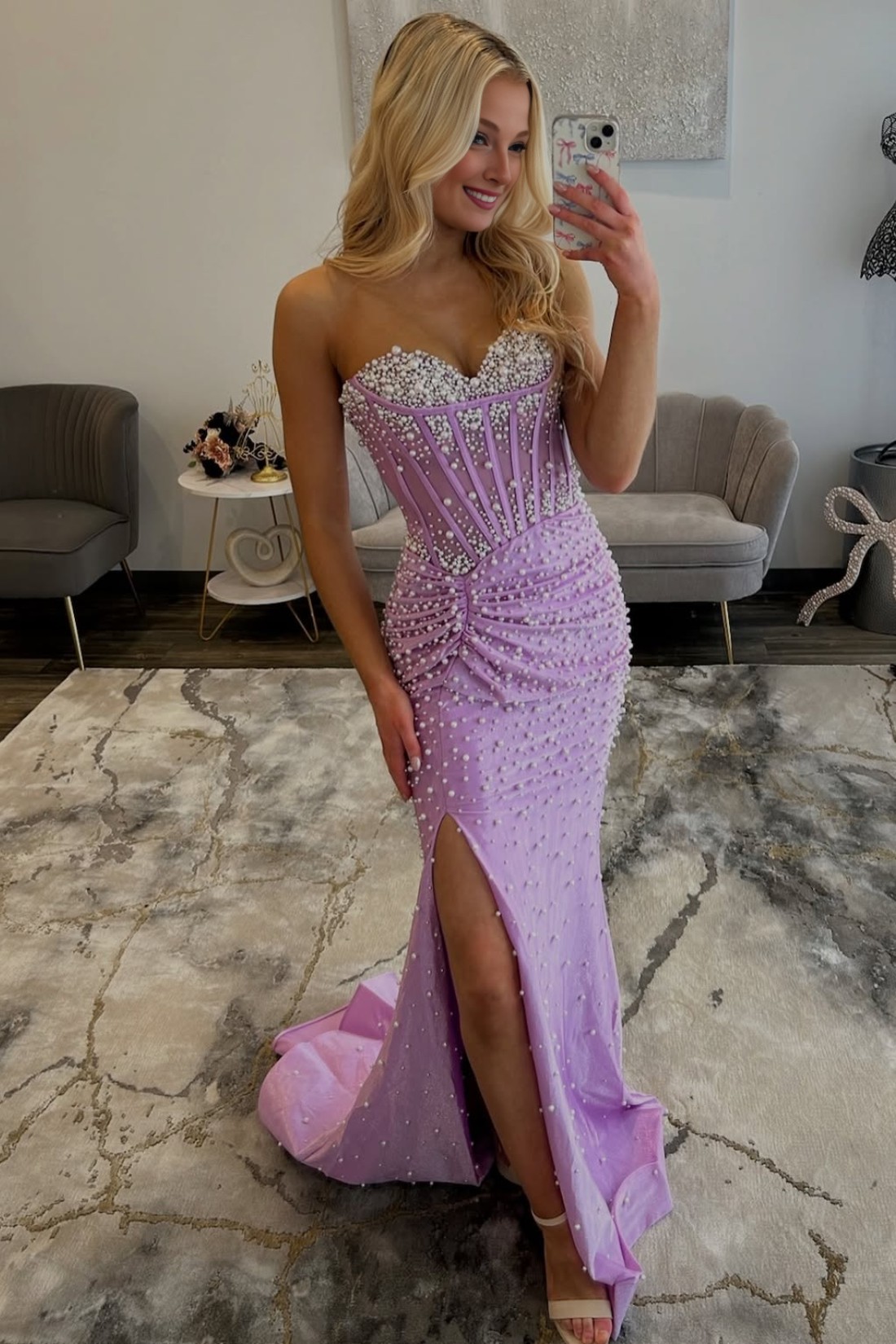
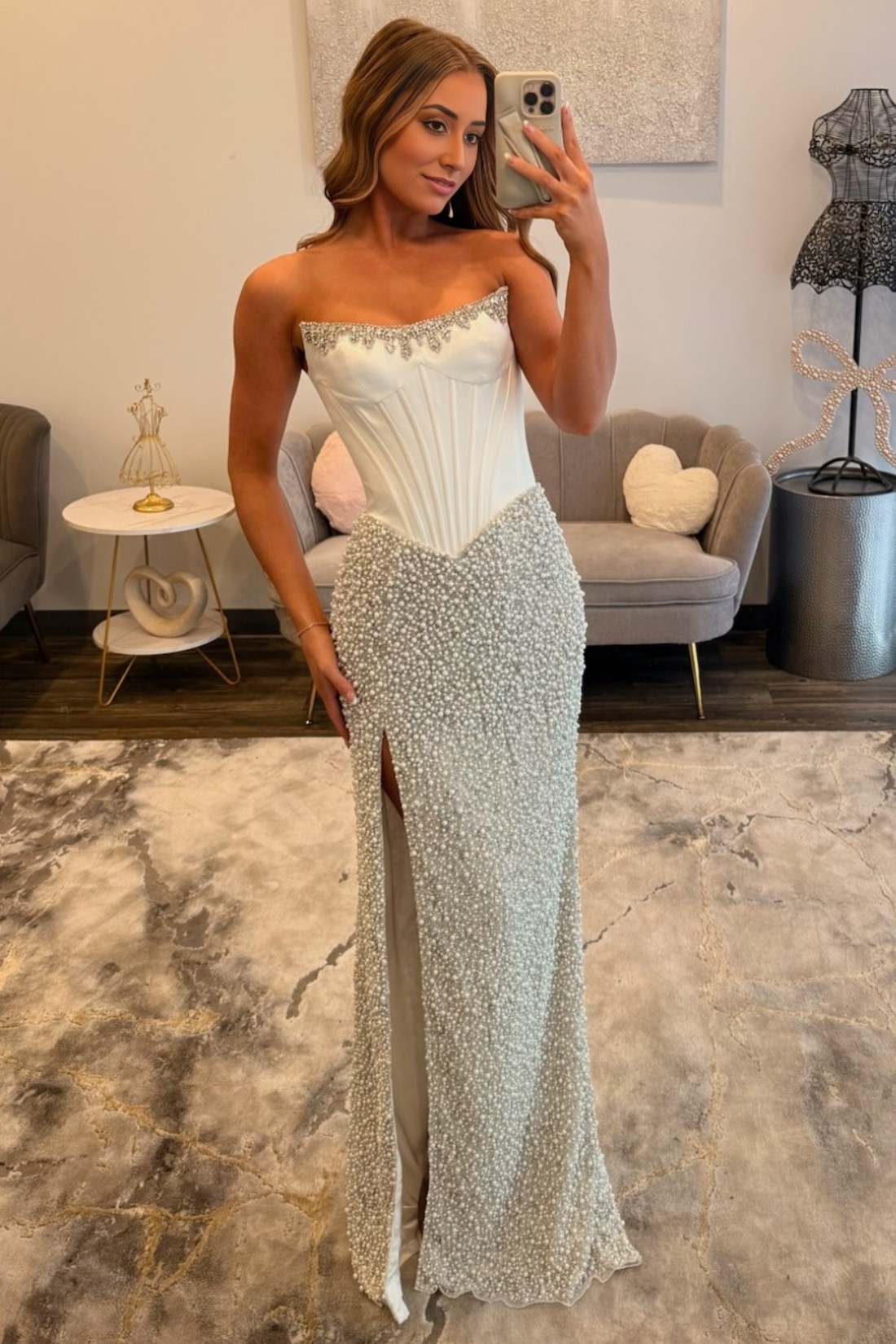
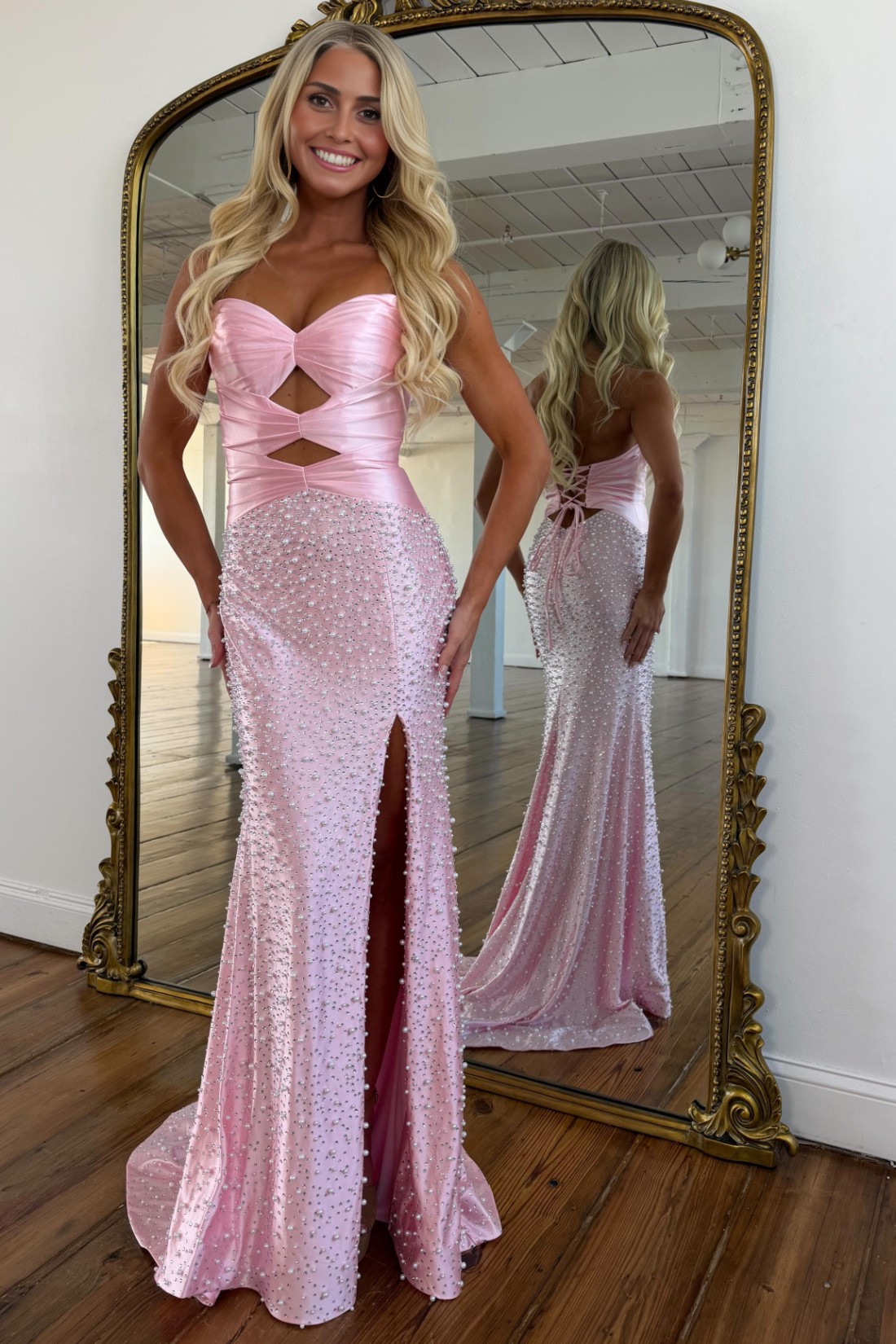
Six black gowns across satin, sequin and lace, so you can see how differently the same shade behaves. Compare the beaded and unbroken satin options side by side before you decide, because that is the single biggest difference on this list.
Fabulous Black Long Sleeves Off-The-Shoulder Satin Prom Dresses with Split Front — beading breaks up the satin plane, which solves the flash problem.
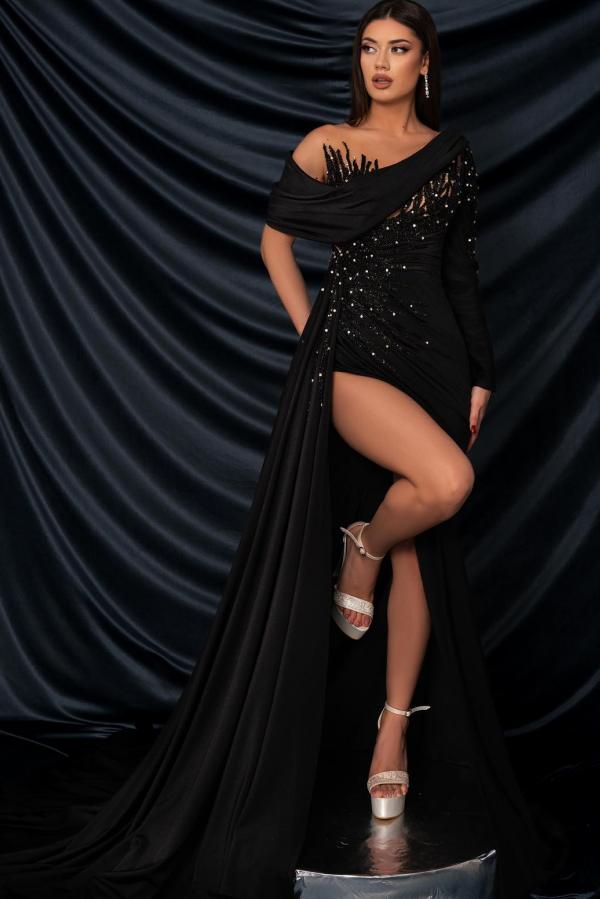
Chic Black Long One Shoulder Sleeveless Mermaid Satin Prom Dresses with Beads — a one-shoulder line gives the highlight somewhere to travel.
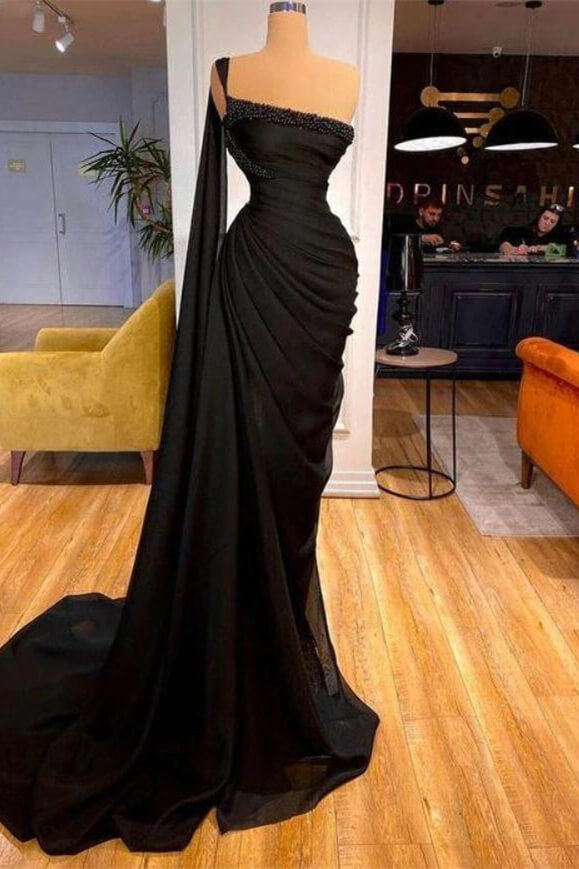
Sexy Long Spaghetti Straps Floor-Length Black Satin Mermaid Prom Dresses with Split — unbroken satin, the most formal reading of black here.
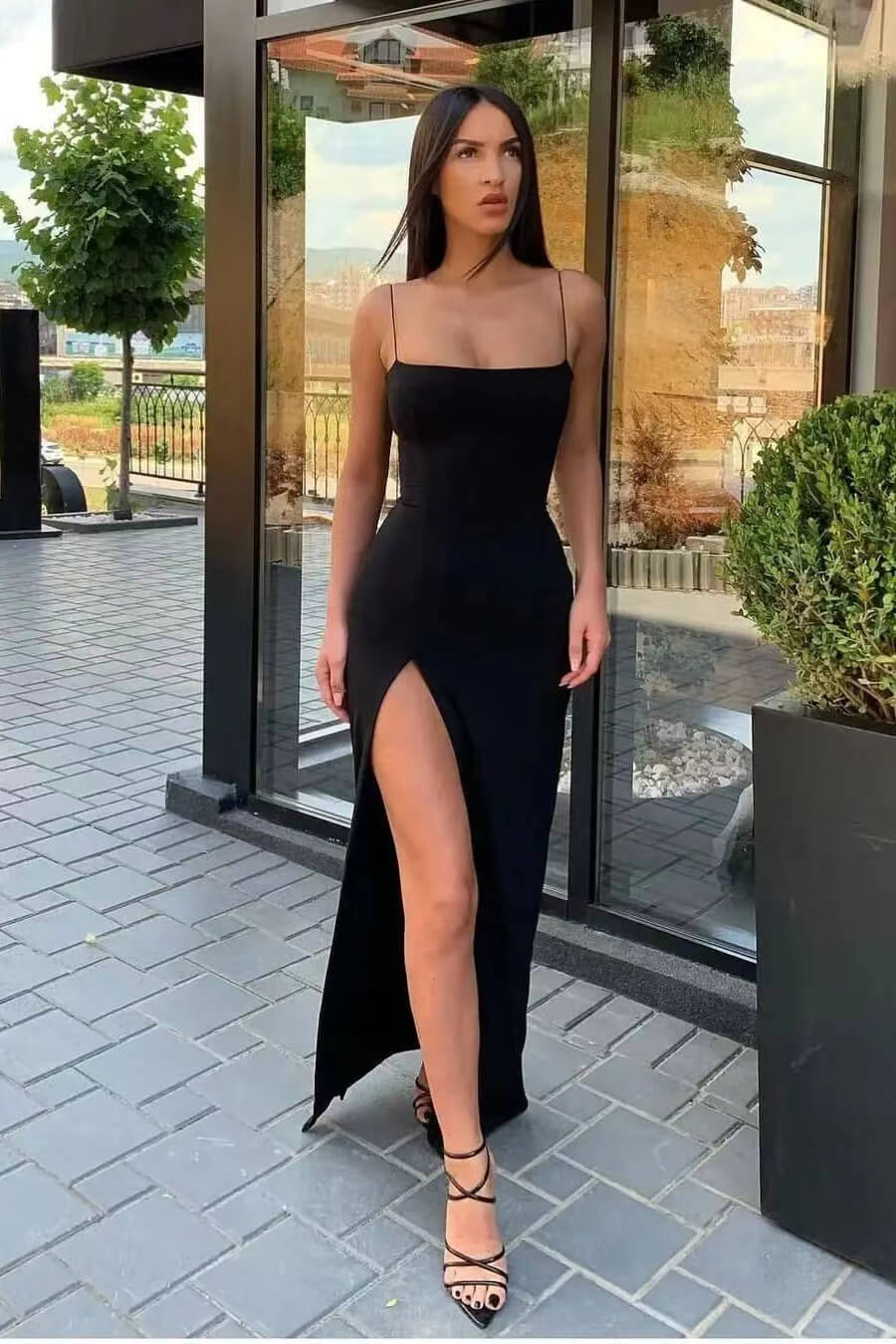
Beautiful Long Mermaid Sleeveless Black Satin Split Front Prom Dresses — a sweep train adds a second plane that catches light differently.
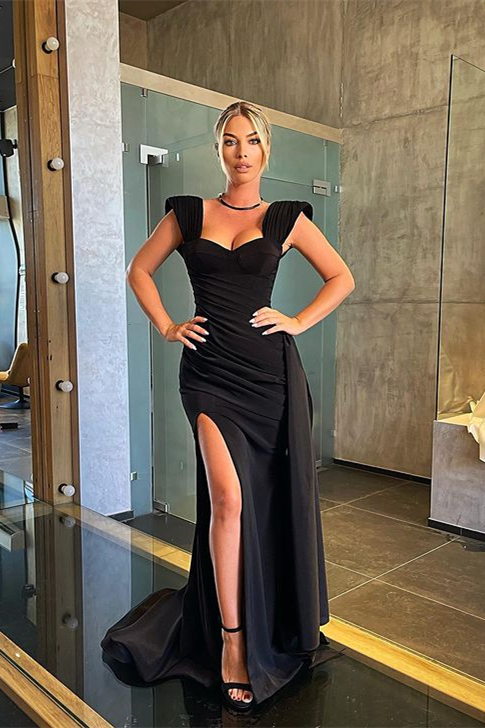
Charming Black Long V-Neck Sleeveless Split Front Satin Mermaid Prom Dresses — a deep V breaks the plane at the top, which photographs better than a straight strapless line.
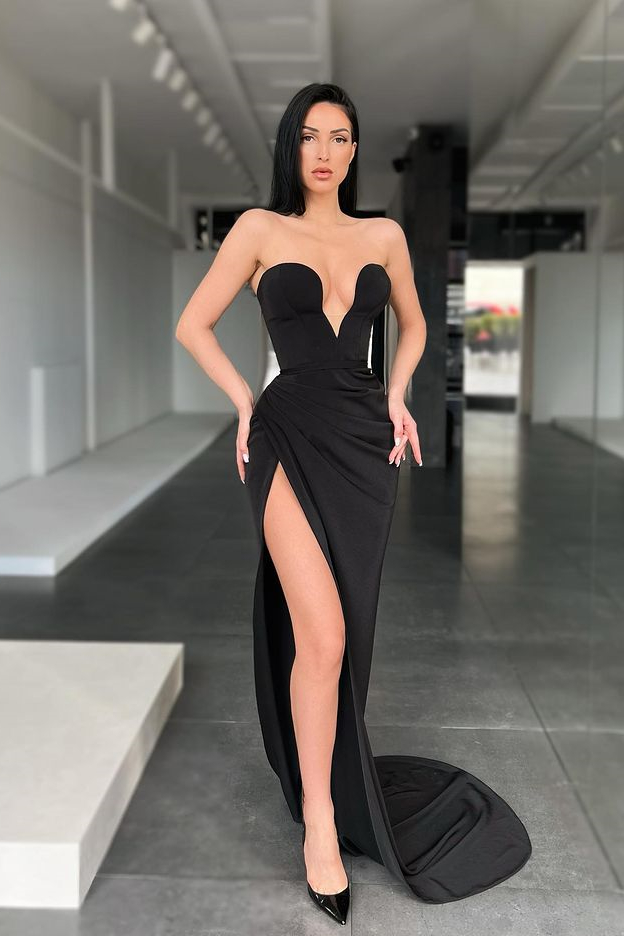
Beautiful Black Long Sweetheart A-Line Satin Prom Dresses with Split — an A-line skirt spreads the highlight instead of concentrating it.
Browse all black prom dresses, or widen out to the full prom dresses range if you decide black is not the one.
Frequently Asked Questions
Why do two black dresses look like different colours?
Because black is defined by how little light returns to the eye, and every weave returns a different amount. Satin reflects in one direction and reads lighter, while chiffon scatters almost nothing and reads deeper.
Which black fabric photographs best?
Sequin and beaded satin photograph most reliably, because they scatter light rather than reflecting it in one plane. Plain satin can catch a flash and produce a bright band across the body.
Is black too plain for prom?
Black is the most searched colour on our site, and it reads formal rather than plain when the fabric has some texture. Beading, lace or sequin gives the eye something to catch under flat lighting.
Does black really make you look slimmer?
Black hides colour, not shape, and on satin it actively highlights the fit. A well-fitted dress in any colour does more than a poorly fitted black one.
Can I match black across different fabrics for a group?
Our Satin, Chiffon and Elastic Satin charts use the same colour names, so Black is the same dye across all three. The dresses will still read slightly differently, which usually looks intentional in a group photograph.
Which black dress should I choose for an outdoor photo session?
Choose chiffon or a lace overlay, because both keep their detail in low evening sun where heavy satin turns into a flat shape. Our fabric guide covers the trade-offs, and our prom colour roundup covers the alternatives.
About the Author
Emma Whitfield writes about prom, homecoming and bridal dressing for Yesbabyonline, with a focus on fit and fabric. She spends most of her time on the questions that photographs cannot answer: how a fabric moves, where a seam sits, and whether you can still dance in it at midnight. She believes the right dress is the one you forget you are wearing.